Growing up in working-class Pittsburgh, Richard Anuszkiewicz wasn’t exactly immersed in luxury materials and interior design inspiration.
Still, he knew from a young age he wanted to study design professionally and pursue it as a career. And as a child, he began taking steps to make it happen.
“Ever since I can remember, art, architecture and design have just been a part of my natural intuition and passion,” Anuszkiewicz said. “I was always seeking outside involvement and ways to learn.”
He began experimenting with drafting software in middle school, and in the fifth grade became a subscriber to Architectural Digest and Car and Driver magazines. As a teenager, he took an architecture course at Carnegie Mellon University, driving to campus on Saturdays instead of hanging out with friends, just because he wanted to.
His noncreative parents didn’t really understand it and were maybe even a little concerned about how he would pay the bills. But they realized it was just a part of his natural intuition toward design.
“They instilled a lot of attributes in me that I am grateful for, like understanding what really matters,” he said. “But they truly are not creative nor (do they) understand design.”
And while they couldn’t provide Anuszkiewicz guidance on the specifics of how to follow a career in design, they could provide a grounding and supportive presence, and model to him the accomplishments that can come from a blue-collar work ethic.
“They have always encouraged me to reach farther, stay committed, and weather the storm,” he said. “They just always want me to do the right thing, and just be a good human in the world.”
Anuszkiewicz looks back at the simple times of those years fondly and truly appreciates growing up amidst the hardworking spirit of Pittsburgh.
“It really was just about community and commitment and hard work,” he said. “And those are things I think have carried me much farther than just my natural creativity. It taught me how to work hard for what I desired.”
Anuszkiewicz studied interior design through an accreditation by the National Kitchen and Bath Association at Virginia Tech. He became a member of the NKBA at the student level in 2007, eager to get involved, meet people and learn more about the industry. And he has been a member ever since.
Through the NKBA, Anuszkiewicz learned about national trade shows, specifically, the Kitchen and Bath Industry Show. He attended his first KBIS in Chicago in 2008, an ‘aha’ moment for him in his career, he said.
“It made the industry very tangible, and it really instilled a lot of aspirations and desires of what I wanted for the future.”
After graduating in 2010, Anuszkiewicz was eager to move to New York or LA or Chicago, work for a big firm and make it big in design — until he realized he had no money to relocate to any of those markets.
“I had very thick rose-colored glasses on and was ready to take on the world,” he said.
It wasn’t long before a local design-and-build firm he had once interned with approached him with an opportunity. They were opening up a cabinetry showroom and wanted Anuszkiewicz to design it. They knew he was eager to go to a bigger market, so they just wanted a little help getting legs on the business before he continued on with his goals.
“I look on that time as very serendipitous, and that things really are meant to happen for a reason,” Anuszkiewicz said, adding that initially, he thought he wouldn’t be able to make a name for himself in a smaller market. But the exact opposite happened.
“Being in a smaller market helped me to garner more notoriety and a lot of success early on,” he said.
In 2013, he was named to NKBA’s Top 30 Under 30 in the nation because of that showroom design. That win connected him to his next venture, working as executive director of casework for an architecture firm in Washington, DC. It was a totally different environment than his previous job, something not unlike going from elementary school right to college, he said.
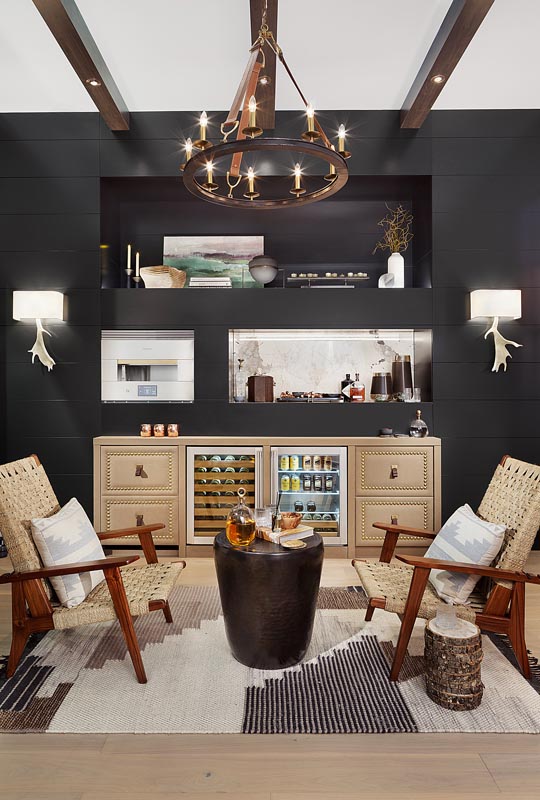
“I was the youngest by 15 years or so at this firm, so all of these people had been practicing for decades. Working with them really honed my design acumen,” he said. “A lot of my natural instincts and intuitions, they just really helped me refine them in a much stronger way. To understand the discipline of design and the power of proportion and scale — all of these important factors that really make a design successful.”
At the same time Anuszkiewicz took the job in DC, he was also getting booked for speaking engagements based on his 30 Under 30 recognition. His natural passion and spark for the industry were a draw, and from there, he started to develop continuing education courses and adjunct teaching, getting involved in different areas of the industry outside of the firm.
In 2016, he accomplished a life goal when he had a small display showcase at KBIS, which won an award. He has had one every year since, though, bigger and bigger each time, to where he now has a 4,000-square-foot showcase.
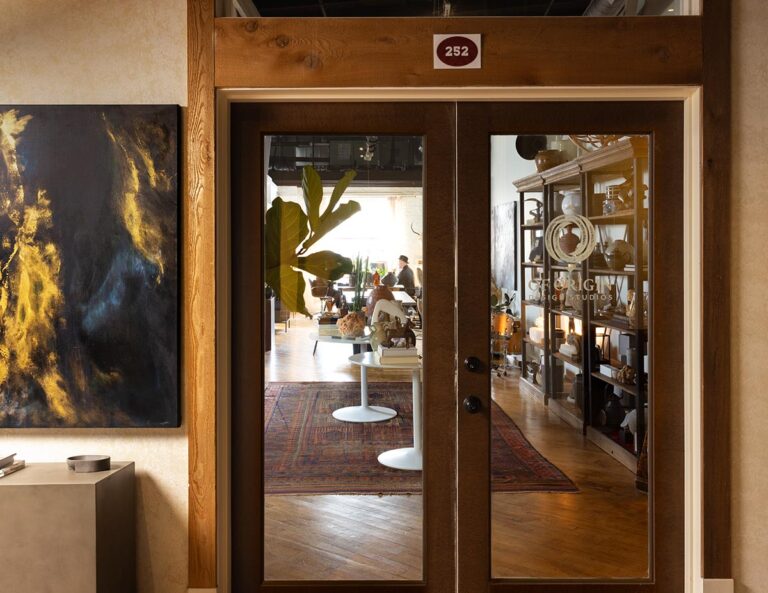
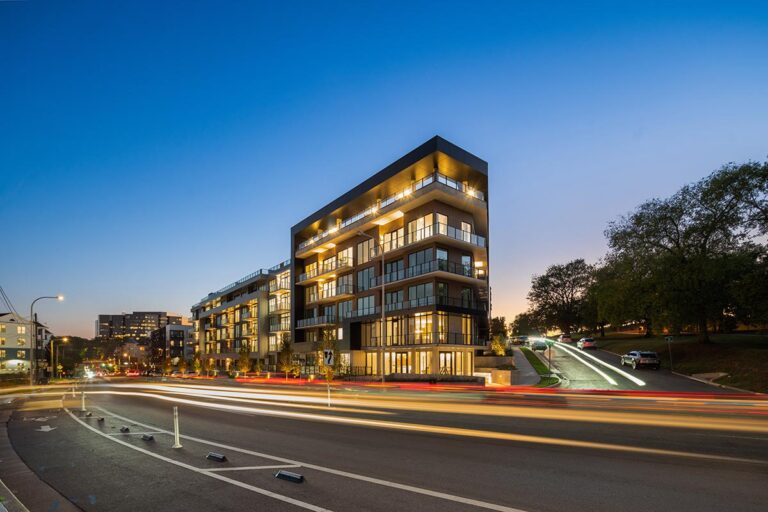
In 2019, Anuszkiewicz was approached by the owner of Design Galleria, asking him to relocate to Nashville to design and open up their showroom at the Nashville Design Collective.
“Moving to Nashville was not on my radar, but I was young in my career and eager for unique opportunities, and so I took a leap of faith.”
And for the past seven years, Anuszkiewicz has been a constant presence in the WeHo showroom, endearing himself to the local design community while at the same time solidifying himself as a force of talent. The sheer volume of work he does and humble acknowledgment of praise tracks with his working-class upbringing.
Recently, a loved one had some health issues, and it led Anuszkiewicz to reflect on where he is now in his life and career, and whether it aligned with his goals. And through conversations with those close to him, he realized he desired something greater, and ultimately, that meant launching his own design firm, Raith Design.
“It feels like it’s just the natural next step in my career trajectory,” he said. “I’ve grown my career in a very multifaceted way, and I want to try and align these tracks under one roof.”
Outside of doing hundreds of kitchen and bath designs, he has also done designs for yachts and vehicles, including Lexus. He has done brand consultation and marketing through his work with Monogram, and he has a greater vision to develop a creative studio where all the different facets of the business exist together.
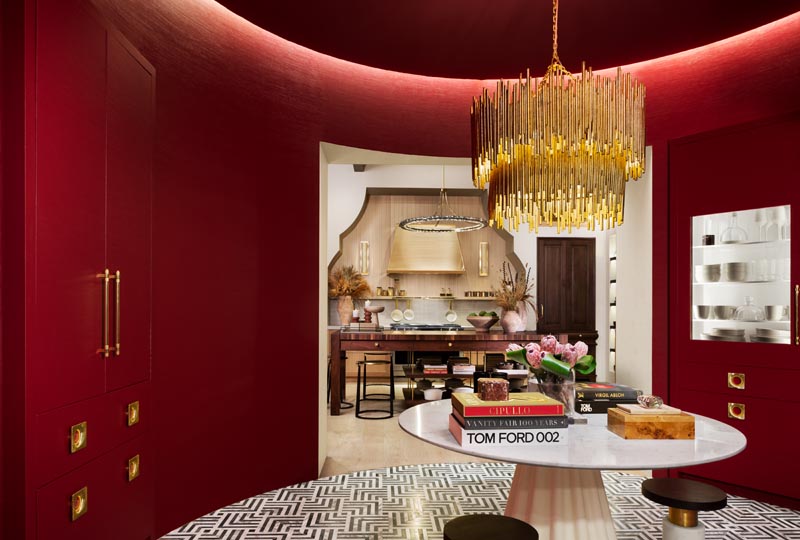
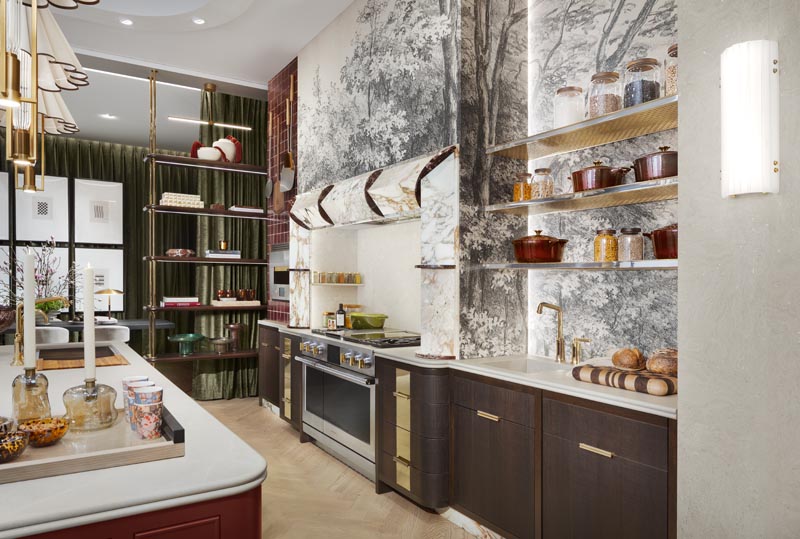
“I believe in the energy of the world and that things are happening for you, that obstacles and challenges can also be wins and successes,” he said. “You’re intended to go through these things and learn from them. And so, while the journey has not always been the most straightforward or easy, I’ve had a clear understanding of what I see on the horizon. And it’s allowed me to continue to push and strive and climb to the next level.”
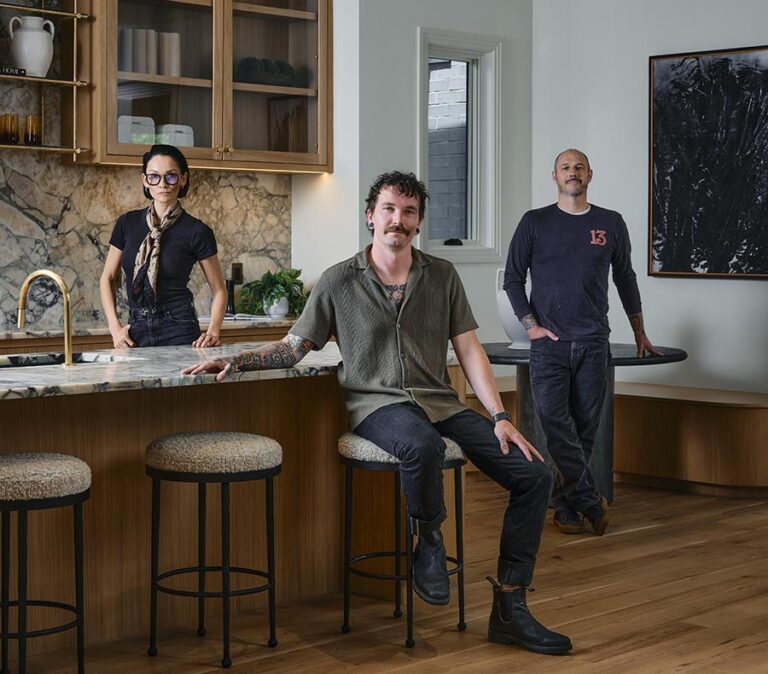
With Raith (Richard Anuszkiewicz, Architectural Interiors, Technology, Humanity), Anuszkiewicz has a commitment to design that is open to the evolution of the world, but philosophically, balanced by age. That no matter how advanced the world becomes with technology, you can never replace the human experience and soul and connection.
“I feel like my whole life has really, in the most successful way, grown through human connection and relationships. And I wanted that represented within the name. The thing I’ve learned to understand over time is the power of my creativity,” he said. “I can often see beyond something, or I can see a greater vision. And early on, I saw that greater vision, and I knew what I wanted to do, and I just trusted that it would continue to evolve and grow the way I wanted to. I have always said, the monetary side is a byproduct of my passion. I lead with my passion first, my heart. That’s what I maintained commitment to in this design world, and it’s served me well.”
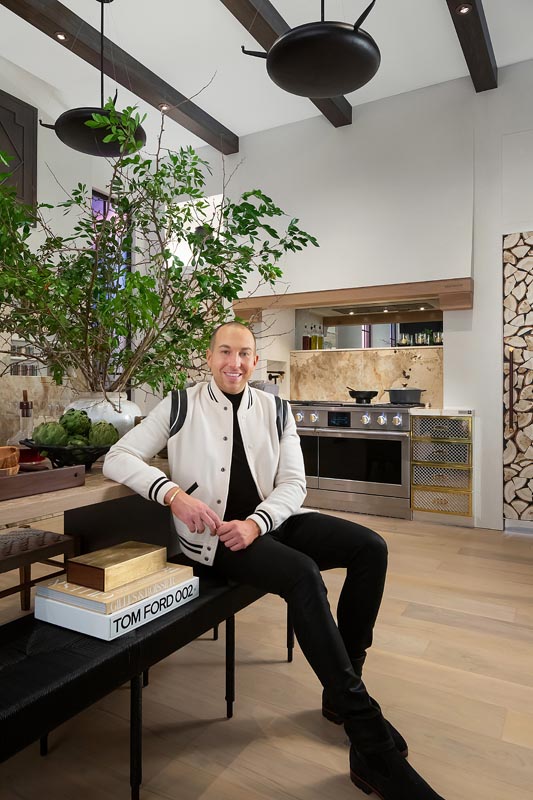
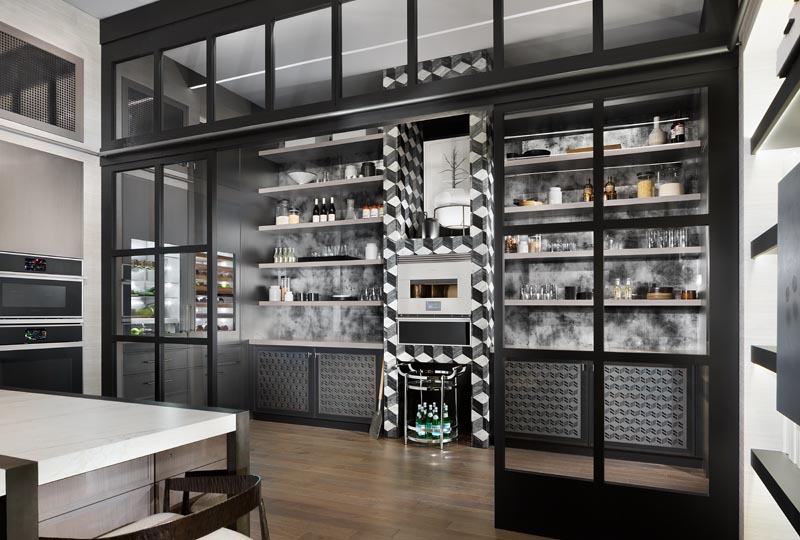
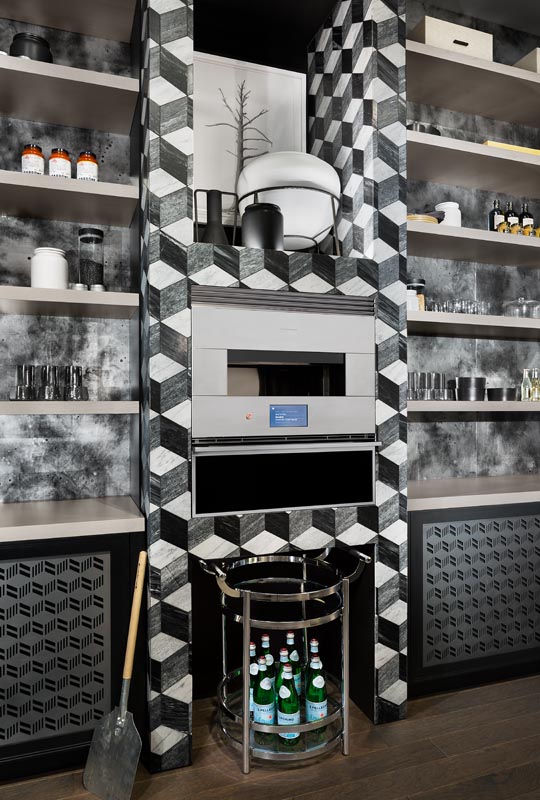
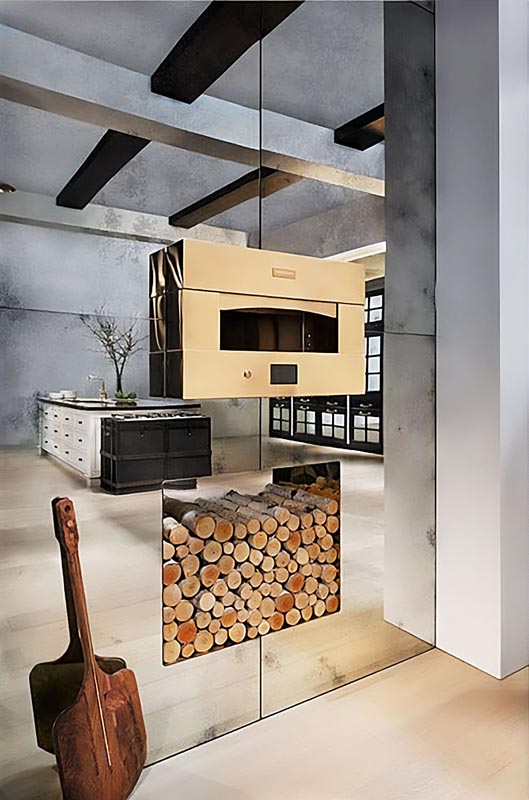
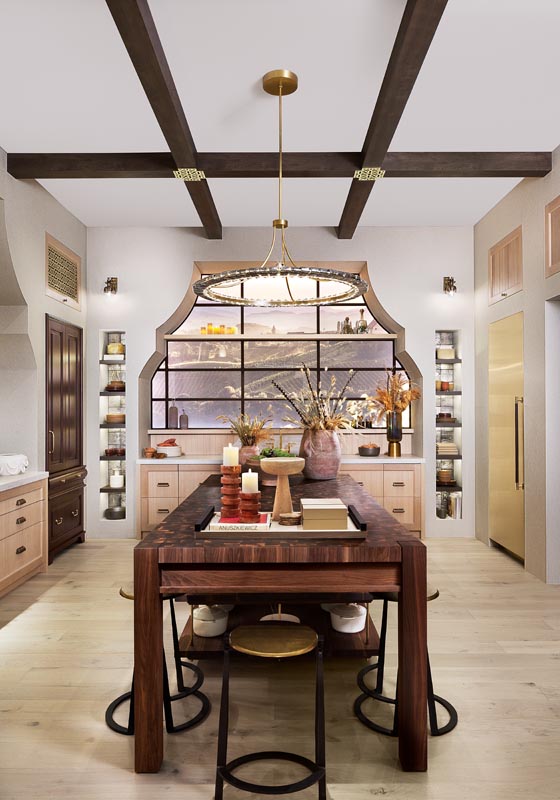
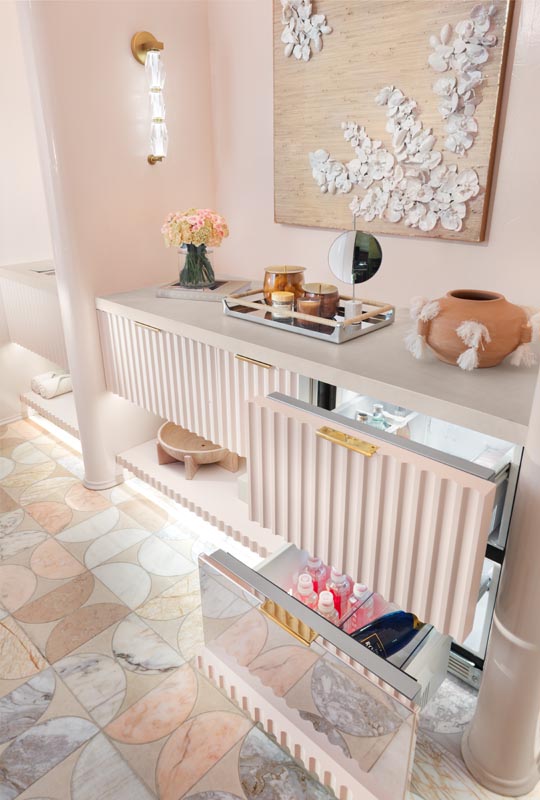
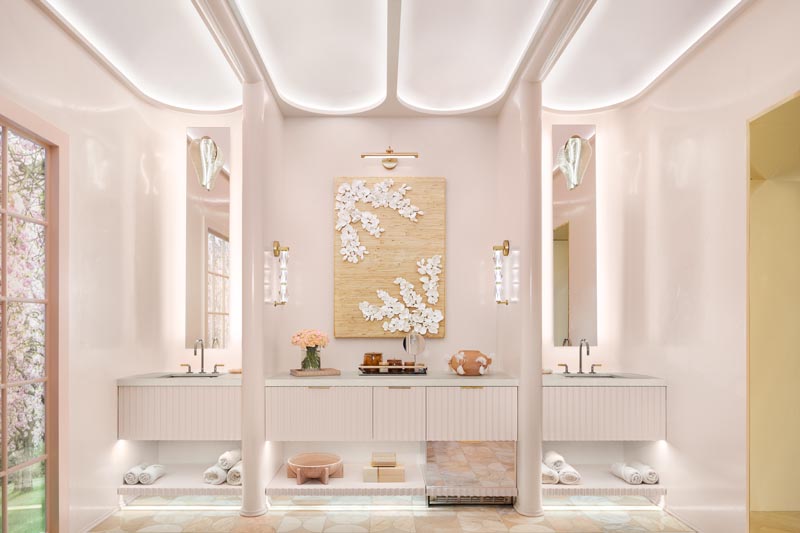
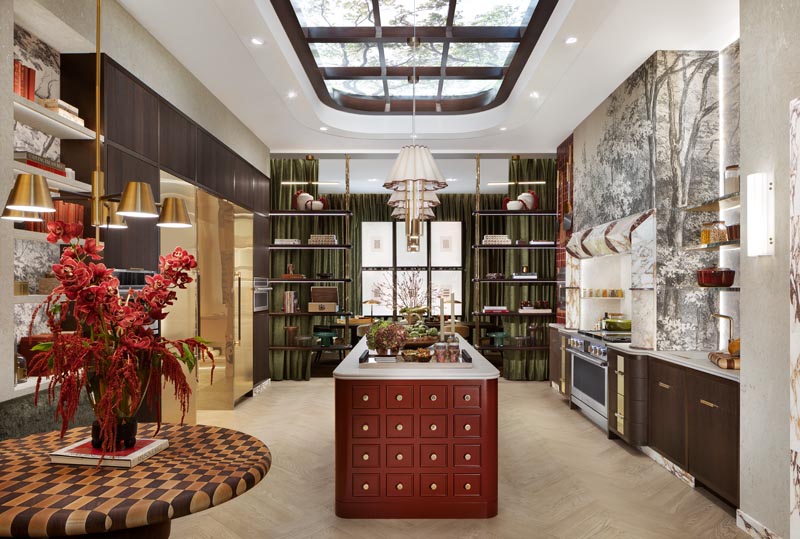
Richard Anuszkiewicz x Monogram
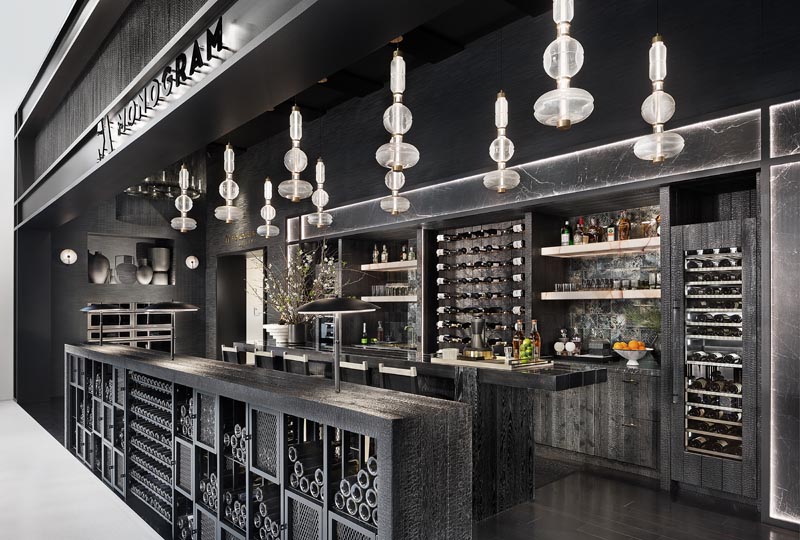
The relationship between Richard Anuszkiewicz and Monogram has grown organically over the years, since he attended a training session at their Chicago showroom.
After his KBIS displays started gaining a following, Monogram approached him to design an exhibit around the launch of two new appliances in 2019. In 2021, he was named creative director of Monogram.
“As a creative person, I truly had to define a visual voice for the brand,” he said. “They wanted it to be distinctive in a way that you could start to resonate and personify what a Monogram kitchen is. And that goes back to the sentiment of soul and connection and emotion. And we really got to develop that story.”
Julie Burns joined Monogram as executive director in June 2020, and after months of Zoom meetings, Anuszkiewicz was the first team member Burns met in person.
“He’s immensely talented, and I have been incredibly impressed,” she said. “He and I complement each other well. There’s just an innate chemistry and an ability to exchange ideas you can’t get from just anyone.” In 2023, they co-created the Monogram Designer Collection.
“A greater goal in my personal career has always been to develop products and do industrial design,” he said.
For the collection, Anuszkiewicz used his own experience to create something that was truly for designers.
“We’re always having to design these one-off hoods or specialty objects in a room, and sometimes clients aren’t always willing to pay for those one-offs,” he said. “I wanted to create products that felt highly customized and bespoke, but could command a more accessible way of integrating them in the space. And that’s really the heart of the collection.”
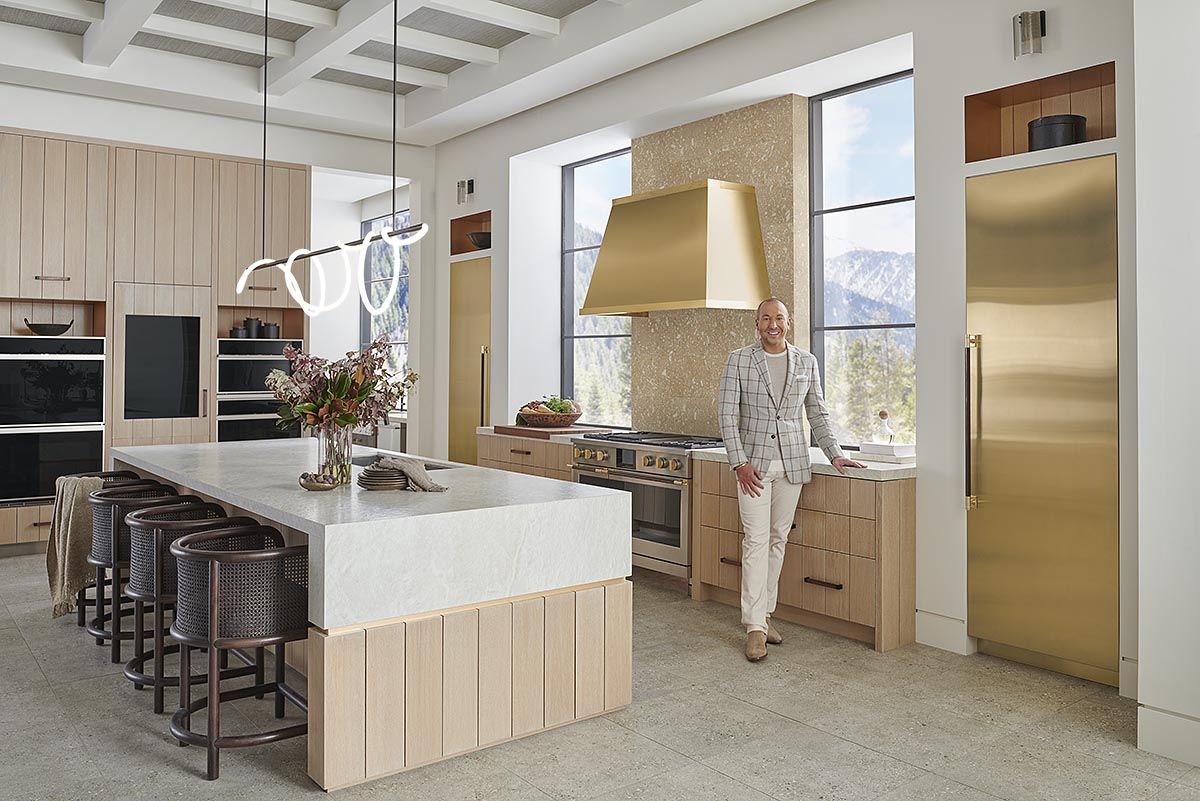
The Monogram Designer Collection includes the industry’s first-ever custom 96-inch high refrigeration panels, stretching floor to ceiling, oversized hoods, and handles inspired by fine jewelry that allow consumers to personalize their appliances.
“One of the most rewarding things is seeing how people integrate them into their own design work,” he said. “They take these objects that I created, and they’re putting their own spin on the world they put it in.”
The collection launched in a brass finish in 2023, and Titanium in 2024.
“There have been a lot of various takes on customization within the luxury market, but the reality is, there wasn’t anyone out there partnering on a deeper level to do product development in this space,” she said.
Now, Burns, along with Monogram, is eager to support him in his new venture, Raith Design.
“He is going to do so much more than he was able to previously,” she said. “I think it is going to give him even more ability to mentor young talent, which is very much aligned with our mission. The sky is the limit with what Richard and Monogram can do together”.