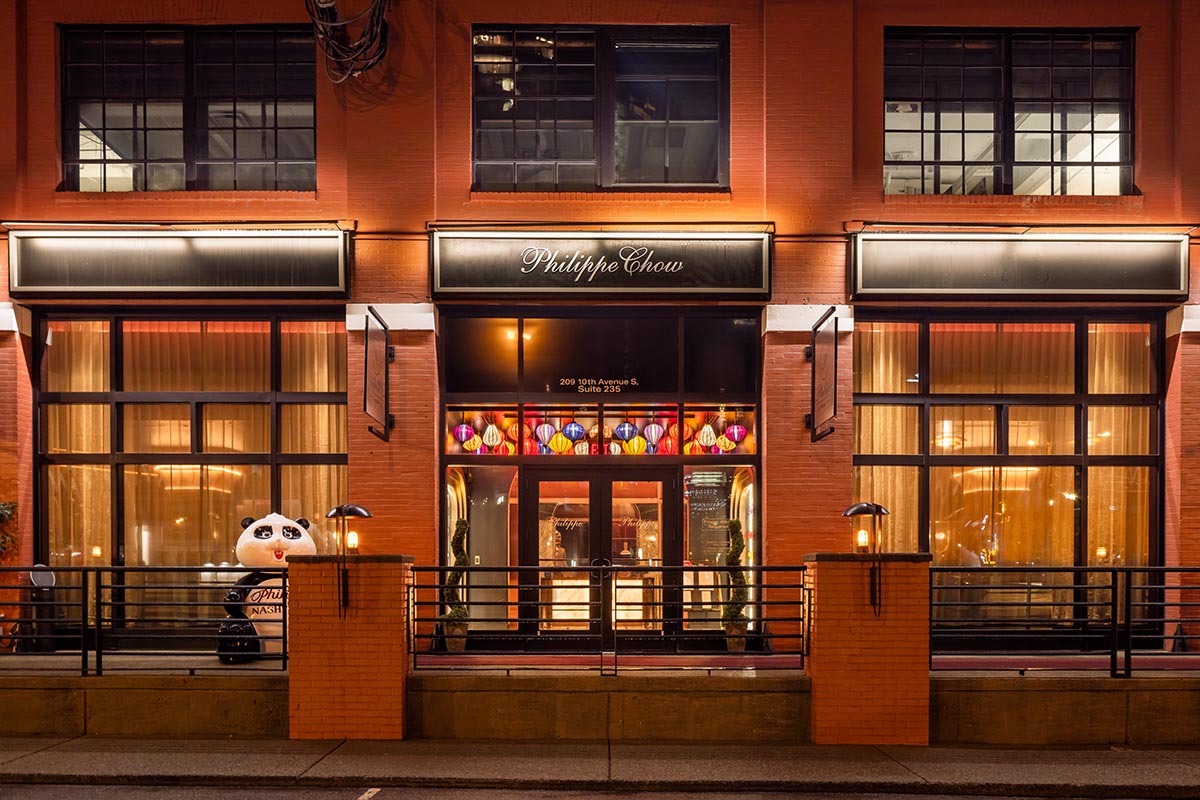
Like many buildings finding a second—or third, or even fourth—act amid Nashville’s near-constant revitalization, Cummins Station began life in 1906 decidedly blue-collar: a railway warehouse and commercial hub serving the city’s trade and industry. Now, 120 years later, the historic structure has entered a far more bourgeois era as one of its newest tenants, Philippe Chow, brings the restaurant’s signature prestige to the carefully preserved landmark.
Award-winning design and architectural firm //3877 took an intentionally modern approach, channeling the opulent refinement of Philippe Chow’s sister restaurants in Kuwait City, New York and Washington, D.C. Through ornate detailing and luxurious materials, the design establishes its own identity while incorporating subtle nods to Nashville throughout.
“Philippe Chow is unlike anything we’ve had in Nashville before,” says Zach Liff, Nashville native and owner of DZL, a real estate investment, management and development company that owns the building. “Philippe Chow is adding a new mix of glamour, excitement and culinary excellence that will help define The Station District and elevate Nashville further in the global restaurant scene.”
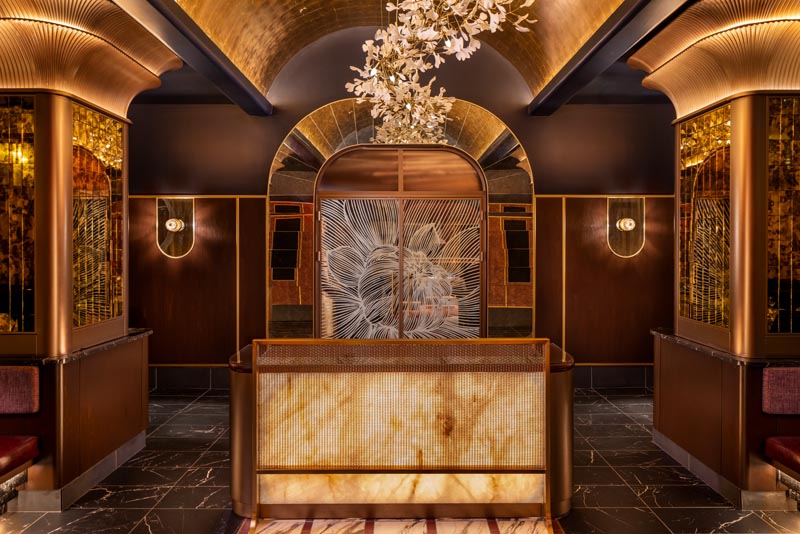
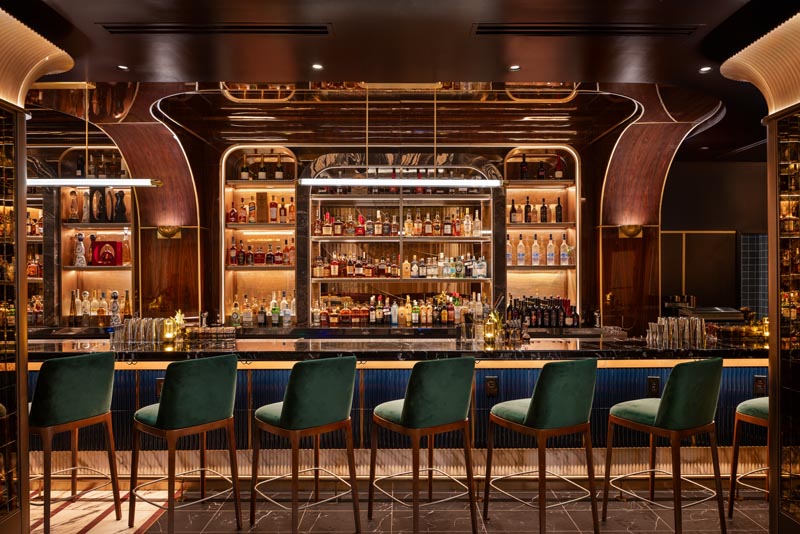
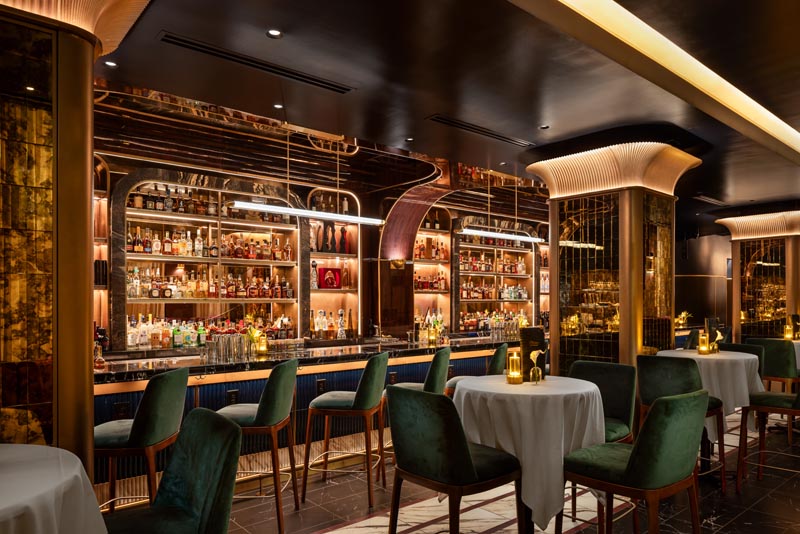
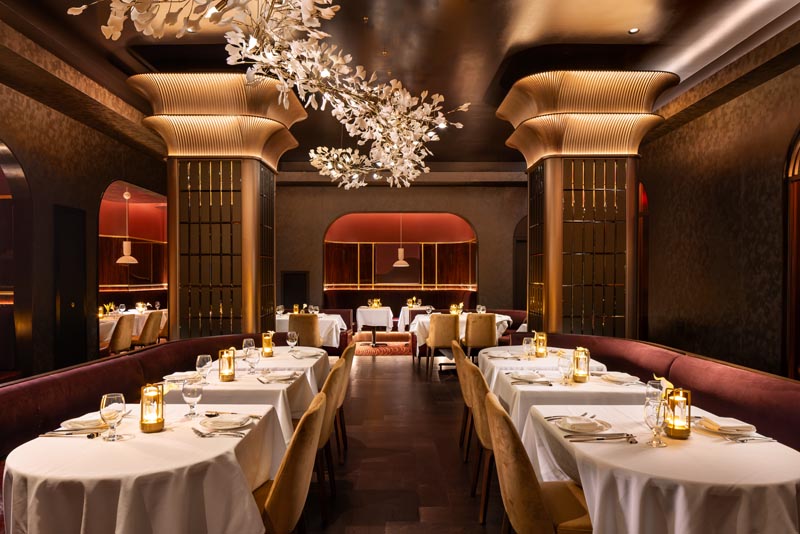
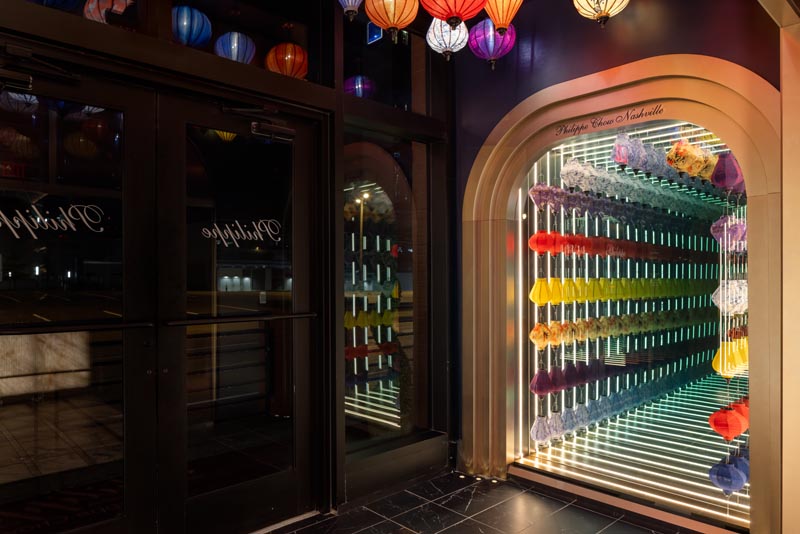
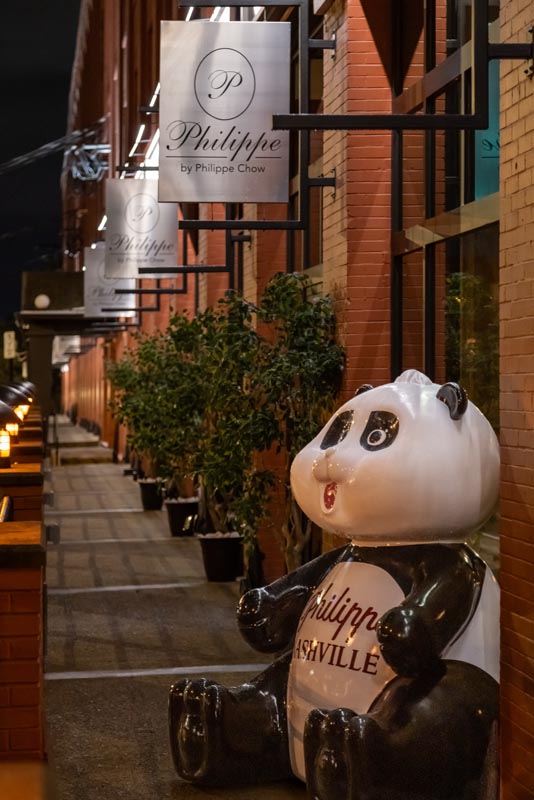
The experience begins at street level—and so did the design challenges. Because of the building’s historic preservation status, nothing could be mounted to the exterior. To address this, the design team, led by Hunter McCalla of //3877, installed an illuminated art piece inside the restaurant’s entrance vestibule. Designed to catch the eye of passersby, the mechanical, motorized lantern display glows from within.
“Every client wants a branded moment, but protecting the integrity of the facade meant we had to approach that differently,” McCalla says. “How do we engage with the community from the street? That constraint ultimately pushed the design in a more creative direction.”
Inside, the display is flanked by gold-clad arches with inset infinity mirrors, creating a striking first impression. The host stand is fully encased in lit-from-within quartzite panels, surrounded by woven metal mesh and topped with a leather-and-glass overlay. From there, guests catch glimpses of the lively dining rooms on either side and the focal point of the space—the bar—to the left.
“Because it’s a very long, linear space that we took over, everything is extremely well organized and sectioned off in terms of lighting,” McCalla says.
The elongated layout is impactful but also necessary. To complete the 10,000-square-foot buildout, Philippe Chow took over seven separate spaces within Cummins Station, each presenting its own complications.
“Just mitigating flooring changes throughout—some creative leveling needed to happen,” McCalla says.
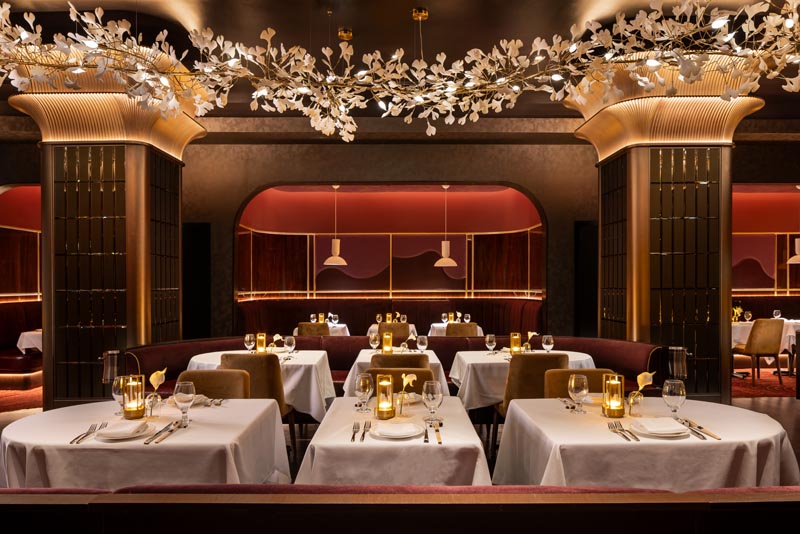
The entry sequence is further punctuated by a custom porcelain ginkgo leaf light fixture housed within a gold-leaf barrel vault that begins at the host stand and extends sixty feet into the space, leading to a lounge-style private dining room. The room is anchored by custom carpet that frames the center’s engineered wood flooring.
“The backbone of Philippe Chow as a brand is ambiance, opulence and a sense of grandeur,” McCalla says. “The barrel vault really fits with that as an architectural detail, especially with the gilded finish. And with the custom chandelier’s sixty feet of ginkgo leaf elements, weaving that from the entry all the way to the private dining room creates a pretty special moment.”
Another challenge the team encountered was the amount of open, industrial space above the existing ceiling—something they ultimately embraced.
“Once we removed that, we had a lot of room to play with and the opportunity to integrate ductwork in a mindful way,” McCalla says. “That’s not something you always get when working in an existing building. But we were able to create a really clean, beautiful ceilingscape, which is something I’m especially proud of.”
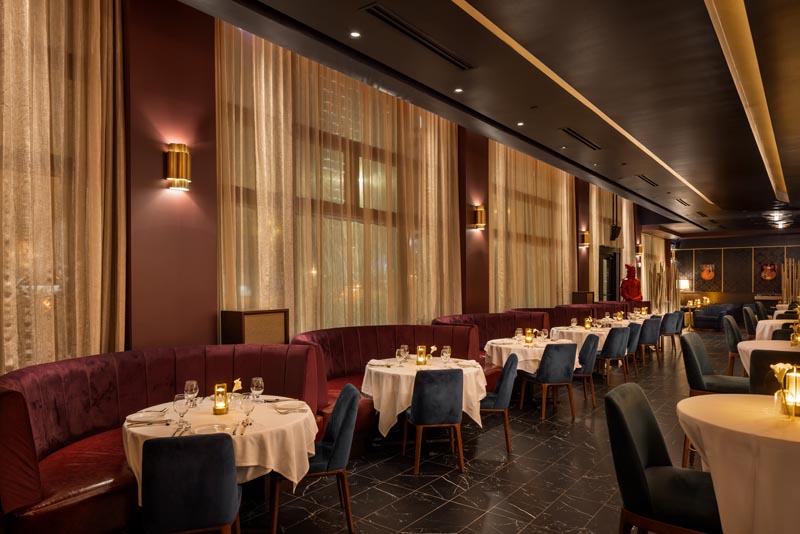
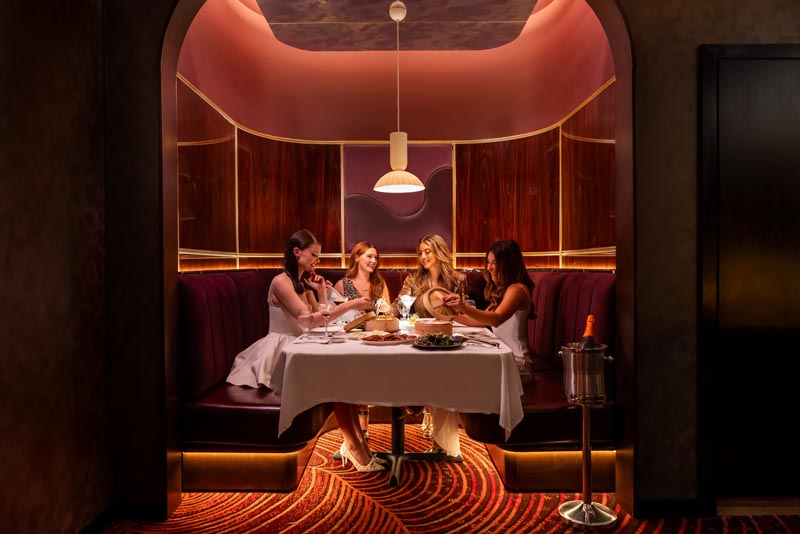
While the private dining room exudes exclusivity, it can also open to contribute additional seating to the main dining area when needed. The main dining room features niches of banquette seating framed by backscreening elements of antique mirrored glass and tufted upholstered panels, enhancing a sense of privacy. Walls clad in wood-look paneling with brass reveal trims add warmth, while each end of the room is wrapped in magenta, tufted palm leaf wallcovering.
The layered materiality continues at the bar, where the barback is clad in lacquered burl wood accented with stone shelving, antique mirror and high-polish metal mesh. It’s here that Nashville-inspired details begin to emerge, including leather panels stitched with patterns loosely inspired by the city’s topography—creating moments of discovery through subtle sophistication.
“We wanted to integrate little nods to the locality in a subtle, abstract way,” McCalla says. “In the private dining room, the leather-clad panels form an artistic interpretation of Nashville’s topography and the way the river moves through the landscape.”
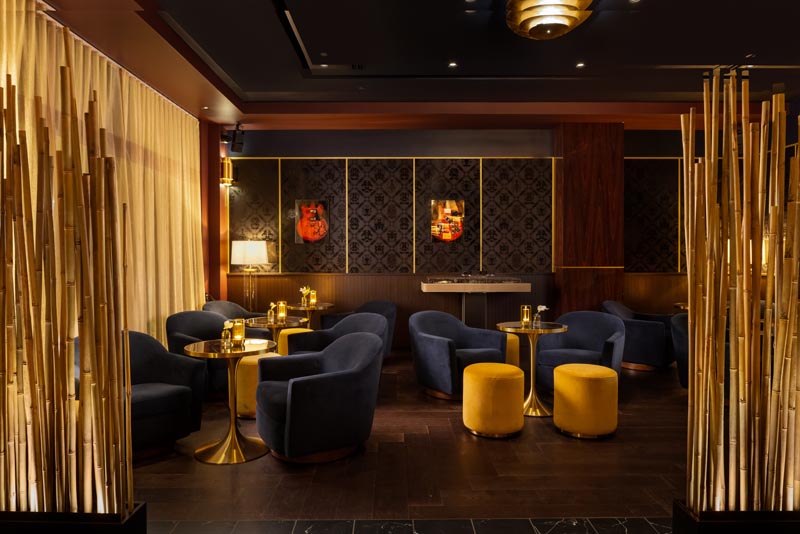
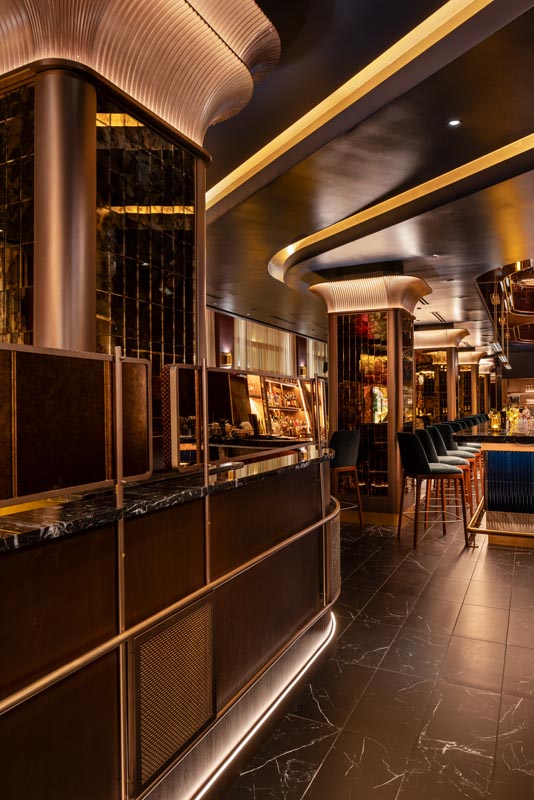
The Gibson Cocktail Lounge further roots the restaurant in Nashville’s vibrant culture with subtle nods to its surroundings. Separate from the main dining room, the space offers a moody yet inviting atmosphere that pairs with its menu of small bites and luxurious cocktails—a departure from the restaurant’s family-style fare. Rich materiality reinforces the glamorous narrative of the main dining room while introducing additional texture through damask wallcovering, tambour wood paneling and glossy finishes.
Plush upholstered seating gathers around cocktail-height glass tables with metal trim and brass tulip bases, creating an intimate setting designed for conversation rather than the bustle of a traditional bar.
Artwork developed in tandem by //3877 and Gibson further deepens the lounge’s musical narrative and namesake. Shadow boxes displayed throughout are composed of guitar components, paying homage to the brand’s iconic fabrication process. Memorabilia, sheet music and instrument parts are showcased within, underscoring the lounge’s connection to Nashville’s musical heritage.
“That connection to the community was an interesting element to celebrate,” McCalla says. “Philippe Chow as a brand is very strong, and much of the design reflects that identity. But through subtle details, we were still able to create moments that connect back to Nashville.”
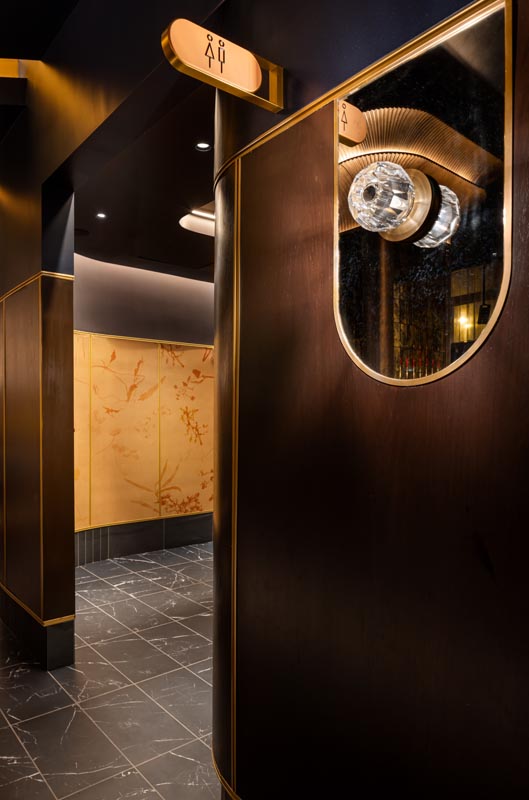
The restrooms offer a final surprise-and-delight moment. Floor and wall tile by local company Haustile create an immersive backdrop of vibrant pattern and color. The women’s room, in purple, and the men’s, in gold, feature stone-clad vanities with brass hardware, antique backlit mirrors and custom ripple metal panels—continuing the layered materiality found throughout the restaurant.
“We really wanted to depart from the rest of the space and do something exciting, eccentric and unexpected,” McCalla says.
As part of the Station District, Philippe Chow sits within a prime downtown corridor spanning 16 contiguous acres along 10th Avenue, beginning with The Baggage Building, extending through Cummins Station along Demonbreun and ending at Cannery Hall on 8th Avenue. The entire district is owned and developed by Liff and DZL.
“We are growing Philippe Chow in cities with global cultural impact, strong hospitality traditions and a respect for culinary luxury,” says Abraham Merchant, CEO of Philippe Chow. “Nashville is one of the few cities in the world we believed would truly appreciate Chef Chow’s renowned style of Chinese cuisine, our unparalleled service and our unique high-energy ambiance.”
Philippe Chow
Cummins Station
209 10th Ave S #235