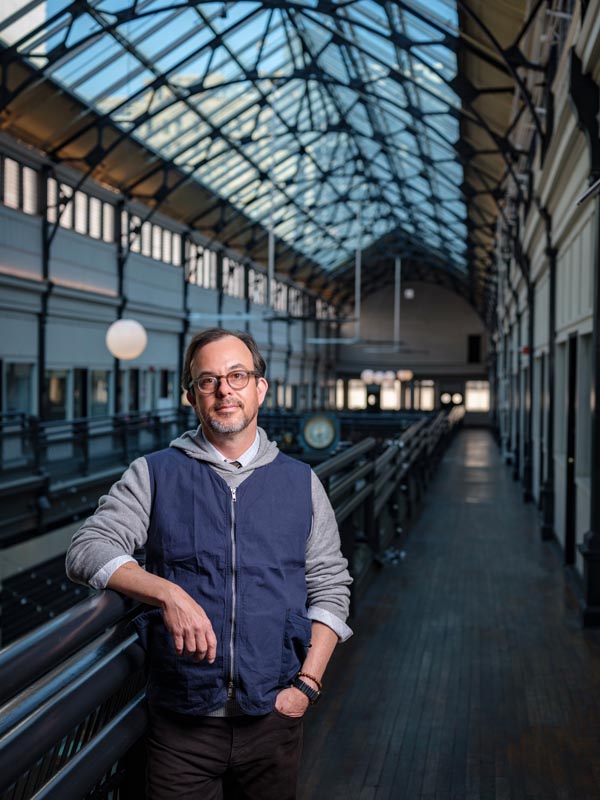
Remnants of winter storm Fern still coat the streets of downtown Nashville in slick shards, but it’s cozy inside The Arcade’s Urban Cowboy Bar on an early February afternoon. Jack the bartender finishes prepping a piping-hot toddy, floating cream and dusting just the right amount of shaved nutmeg.
That architect Nick Dryden and designer Chuck Draper are here at the bar, in from the cold, is a cool coup. Jack has so many questions—because Cowboy customers always have so many questions.
Was this texture original to the 1902 building? What about these beams, this brick? How much of the historic Arcade did Dryden Studio change during the renovation process that started around the pandemic, prompted by new ownership and inspired by an old-fashioned belief in historic stewardship?
Draper points out hidden treasures, like cast iron columns originally brought here by horse. Dryden outlines other artful subtleties—and laughs.
“One of the architects in our office, his wife hadn’t been in here since we’d started the project,” Dryden remembers. “She knew we were the architects, but didn’t know the full scope of the project. She’s like, ‘I can’t tell what you guys did here, but I love it.’”
And there it is: the careful art of historic preservation in a single offhand comment.
How Things Change
Historic preservation, fundamentally, means restoring, repairing, renewing—sometimes rethinking. But it’s always meant to continue a story, never rewrite it.
Dryden’s team came in to renovate the greater shell of the century-plus-old downtown Nashville shopping arcade as a group of investors—including real estate power players Rob Lowe and Elliott Kyle—came on to plan The Arcade’s next chapters. And the timing couldn’t have been better. In 2022, the Preservation Society of Nashville launched to support Music City’s history, with the goal of showing how growth and prosperity can coexist with protecting the city’s soul.
Dryden serves as a board member, and the renewed Arcade illustrates the Society’s mission writ large—and made real.
“The Arcade has long been a crossroads for commerce, creativity and community downtown,” says David Greider, the Preservation Society’s executive director. “The update of The Arcade is an important reminder of how vital it is to keep Nashville’s historic places active, relevant and welcoming to new audiences, and a testament to honoring architectural character and legacy in the process.”
To Dryden, it’s also an opportunity to reset how people think about preservation.
“A lot of what people’s understanding of preservation has been in Nashville—or really globally—is that it’s a very traditional act or response to history,” he says. “(Like) you’re trying to freeze something in a particular moment of time, not thinking about how things change, or how they can and should be adapted in the present and future.
“When (the Preservation Society) presented me with what they were thinking about doing, I was like, ‘Yeah, I’m 100 percent in. But let’s make sure we’re looking at this in a really holistic way—and that it’s not just a bunch of bowtie-wearing preservationists laying down in front of bulldozers.’”
Old and New in Harmony
Even on a quiet winter weekday, the new-classic Arcade reflects what’s possible in historic preservation—fresh faces and old places operating in harmony.
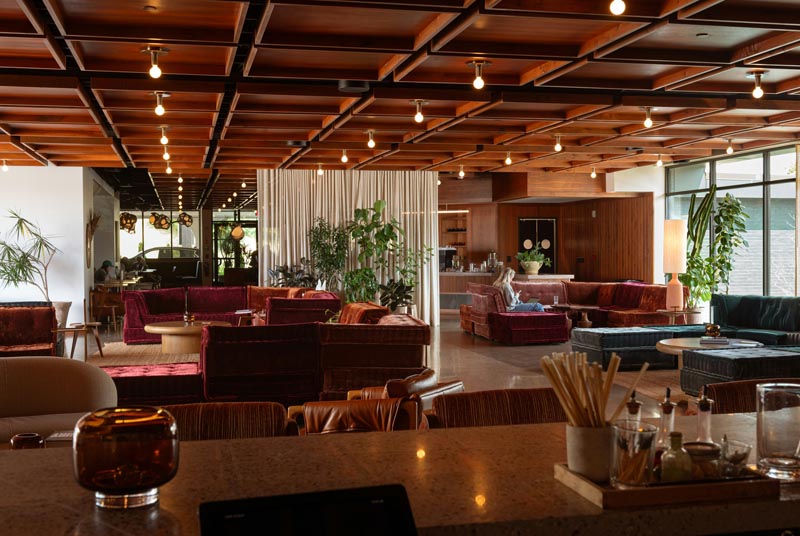
The Cowboy Bar, with its adjacent Roberta’s R Slice pizza stop, takes up a significant share of ground-floor footage, and it represents a purposeful tranche of the Dryden team’s work—even if many visitors (and/or architects’ spouses) wouldn’t immediately clock everything that went into it.
“This was an exercise of really stripping it down to the bare bones, but then being very considerate about what you’re introducing as the next iteration of this space,” Dryden says, glancing across the wide-open upstairs bar, with windows overlooking Rep. John Lewis Way on one side and the promenade on the other.
This used to be three or four different spaces, walled off and closed in. A former tenant set a barber’s chair facing the inward window—and that lit a creative spark.
“It was like, ‘Oh, right. That’s your view right there,’” Draper remembers. Dryden nods: “That’s your back bar.”
Hotelier, designer and restaurateur Lyon Porter embraced the vision and, with his Urban Cowboy concept, joined a growing roster of Arcade tenants that also includes Ugly Bagel, Buddy’s Tiny-Tonk, Savannah Bee Company and Any Old Iron, among others.
Extending History
Those street-level businesses operate beneath another fresh concept: The Arcade Arts hub, founded in 2023 to provide studio space to artists in residence and, through open studios and curated exhibitions, support the Nashville creative community.
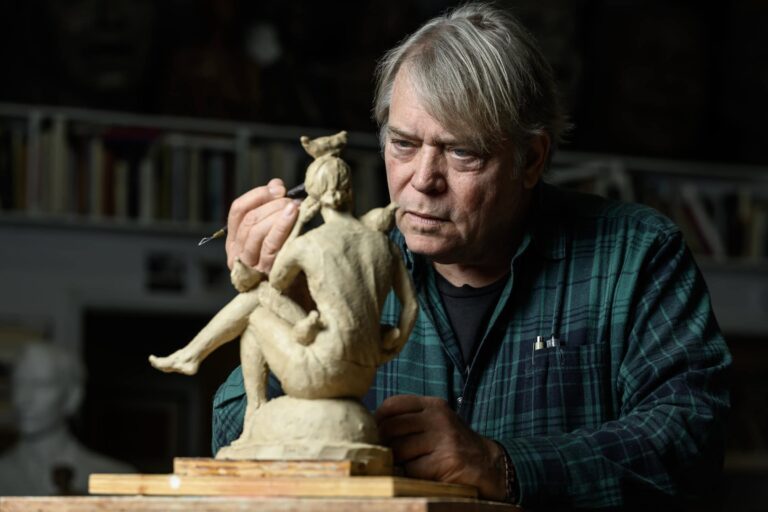
The current, second Arcade Arts cohort includes painter Omari Booker, sculptor Clay Williams, textile artist Sandra Chandler and others, with a total of 12 eclectic artists in residence each year.
The program has an endowment, employs a full-time director, and draws an impressive mix of locally based and nationally recognized artists for its jury-selected spaces.
While Arcade Arts itself is new, the idea isn’t out of sync with history. Through the generations, the upper ring of spaces tended to house service-oriented businesses—CPAs, watch and jewelry repair shops. The mezzanine level wasn’t easy to lease, so rents reflected demand.
“Naturally,” Dryden says, “it attracted an artist community. And although that was not original to The Arcade, it became a very important characteristic in the last 25 years.”
Excavating History
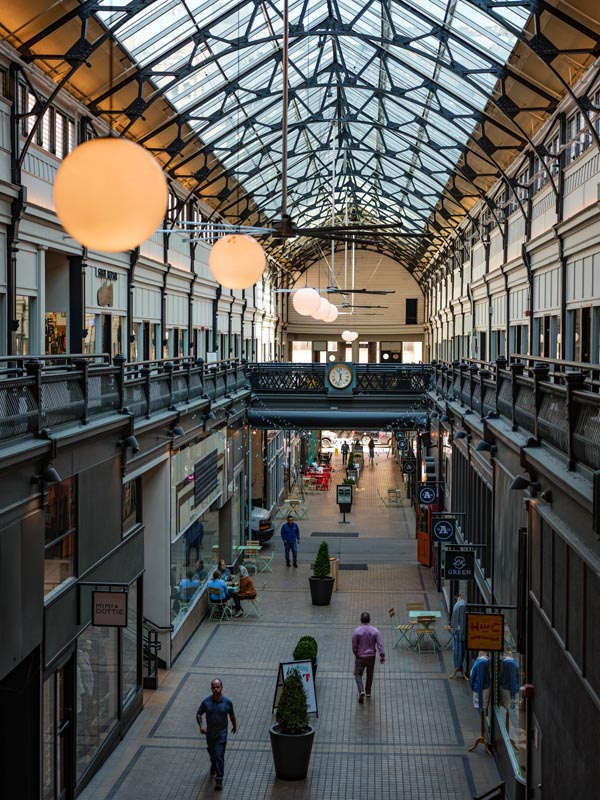
Inspired by Milan’s Galleria Vittorio Emanuele II, this precursor to the modern mall opened in 1903, with newspapers noting that some 40,000 to 50,000 people came downtown for the grand unveiling. The area thrived as Nashville’s shopping and commerce core in those early decades. In the ’60s, lunch counter sit-ins brought the Civil Rights Movement to The Arcade. In 1973, the property was added to the National Register of Historic Places, before deterioration and waning interest took hold. In 1998, tornadoes tore through downtown—and through The Arcade’s distinguishing gabled glass roof.
Some chapters are brighter than others, but the Dryden team felt every era deserved attention and consideration—even if that brought challenges.
“There’s 10 histories that you have to preserve here,” Draper notes. “There’s 1902, there’s the ’20s, the ’60s, ’80s, early 2000s. And there are also histories you want to remove. And all of those had grease in there. Everything was dirty.”
It took a mix of scrubbing, vision, focused research and physical excavation to untangle more than a century of changes, additions and updates within The Arcade. (The untangling was, in part, literal—Dryden and Draper say thousands of phone and internet lines ran through the building.)
The team researched, studied photographs and dug deep into the building’s core to determine what remained—and what to do with it.
“We had to do this really rigorous forensic documentation of the existing conditions, just to understand it,” Dryden says. “And that allowed us to analyze a lot of the different materiality.”
Some of the less crucial material was obvious—Home Depot plywood siding from the ’90s added little to The Arcade’s core story. But much required interpretation. To decode it, the Dryden team leaned on tenants-turned-historians like Robert Person, better known as Percy, longtime proprietor of Percy’s Shine Service, opened in 1947.
“He’s the best on-premises historian you could ever have,” Dryden says.
Moving Forward
Percy and others offered valuable insight into what was. The current developer and ownership group gave the Dryden team the latitude to interpret what could—and should—be.
“You want to respect that past, kind of understand how it’s functioned and served the community,” Dryden says, “but you don’t want to put it in a time capsule. You want to give it something new that will project it into the future.”
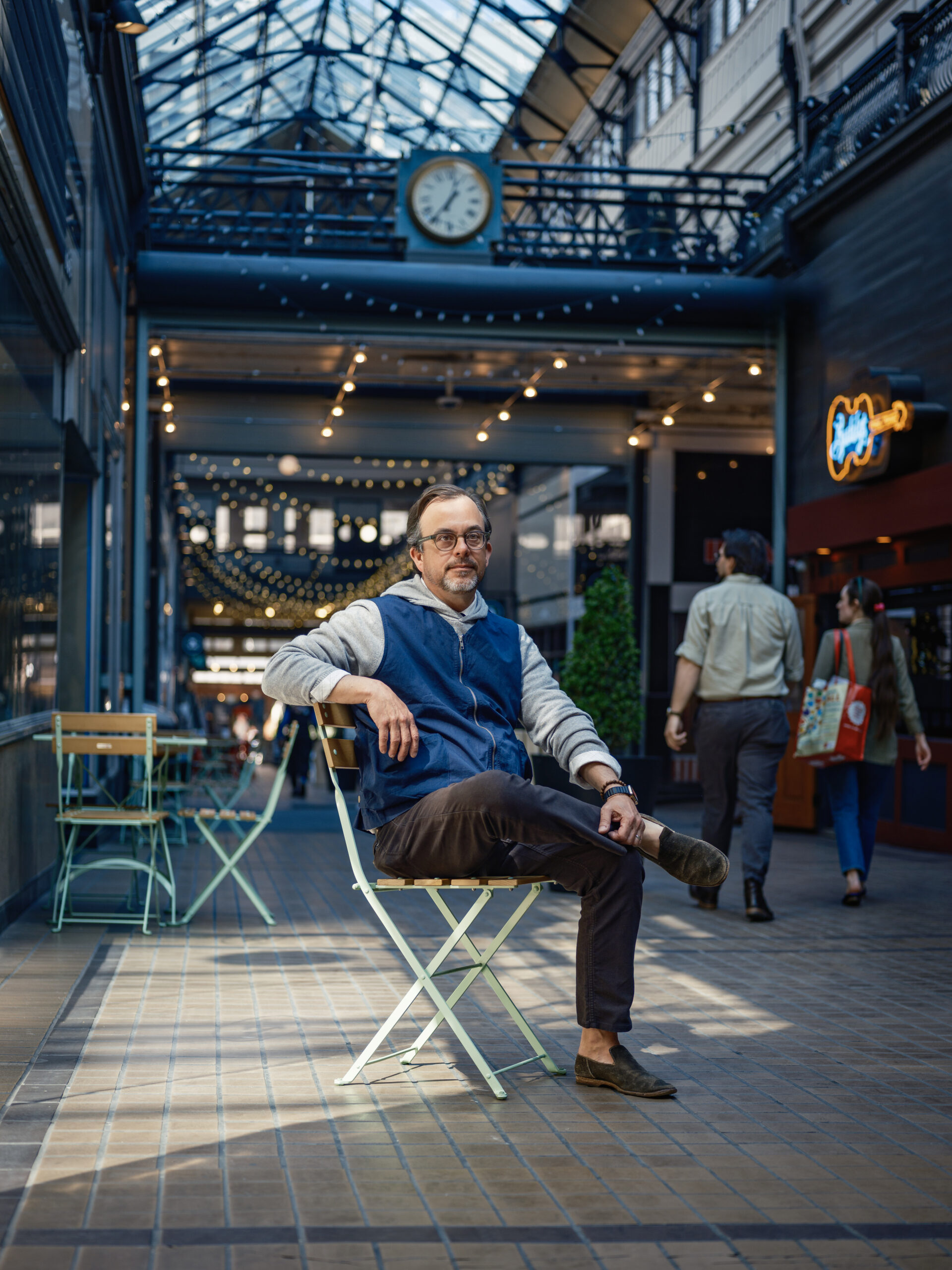
When you focus on the facade and look down the spine of The Arcade now, it resembles photos from its early decades: balanced, dignified, mantled in glinting glass. But The Arcade doesn’t feel frozen. More like living history—which was the intent.
“A lot of it is about preservation of space, but also preservation of place,” Dryden says. “How this place has been influenced by years of different businesses activating it. It’s kind of like a mainframe—over time, different things have been plugged in at different capacities. But the mainframe is still here.”
Future-focused preservation was part of the Dryden Studio ethos before The Arcade, seen in adaptive reuse projects like May Hosiery Mills and continuing into new work, including a pavilion in Centennial Park—the park’s first major new structure since 1963.
But The Arcade project delivered something more: a model.
“In some ways, we feel like we’re the docents of this place, for this small period of time,” Dryden says. “Just to take care of it. Like, ‘Let’s do our best to care for this place and help it find its voice now—and what it can become for the next hundred years.’”
Who’s Nick Dryden? You’re likely already familiar with his work.
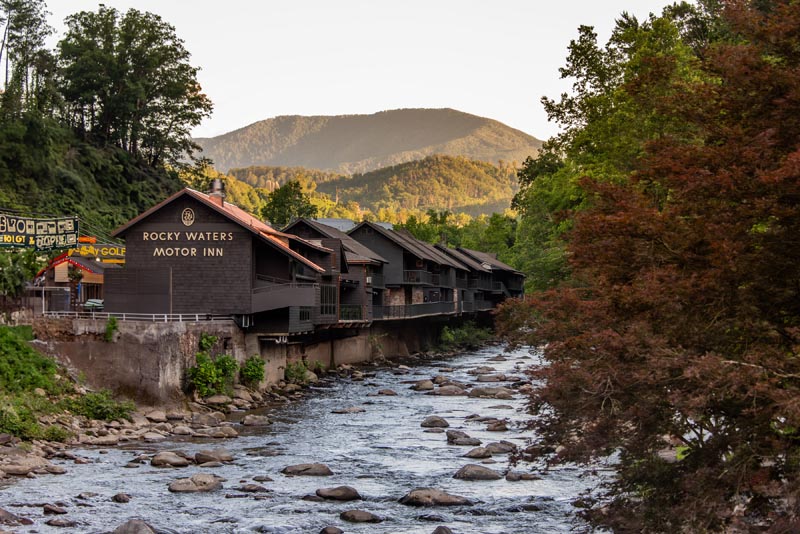
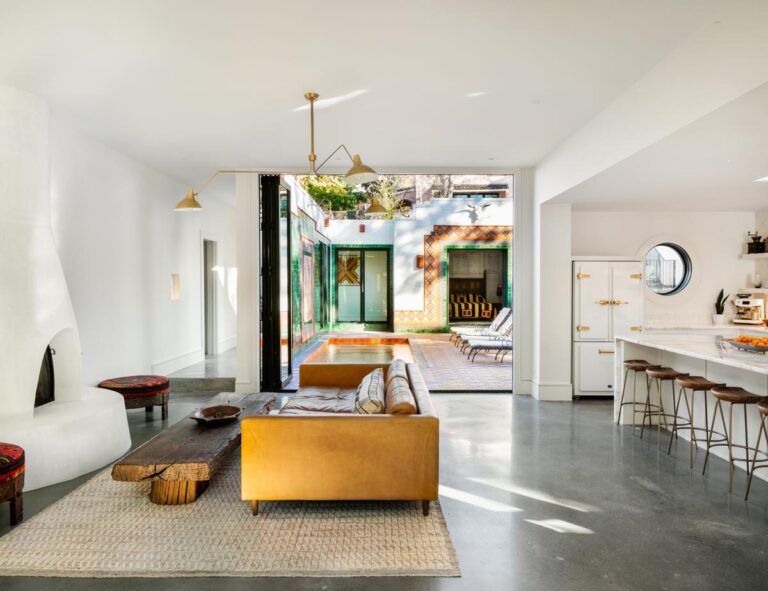
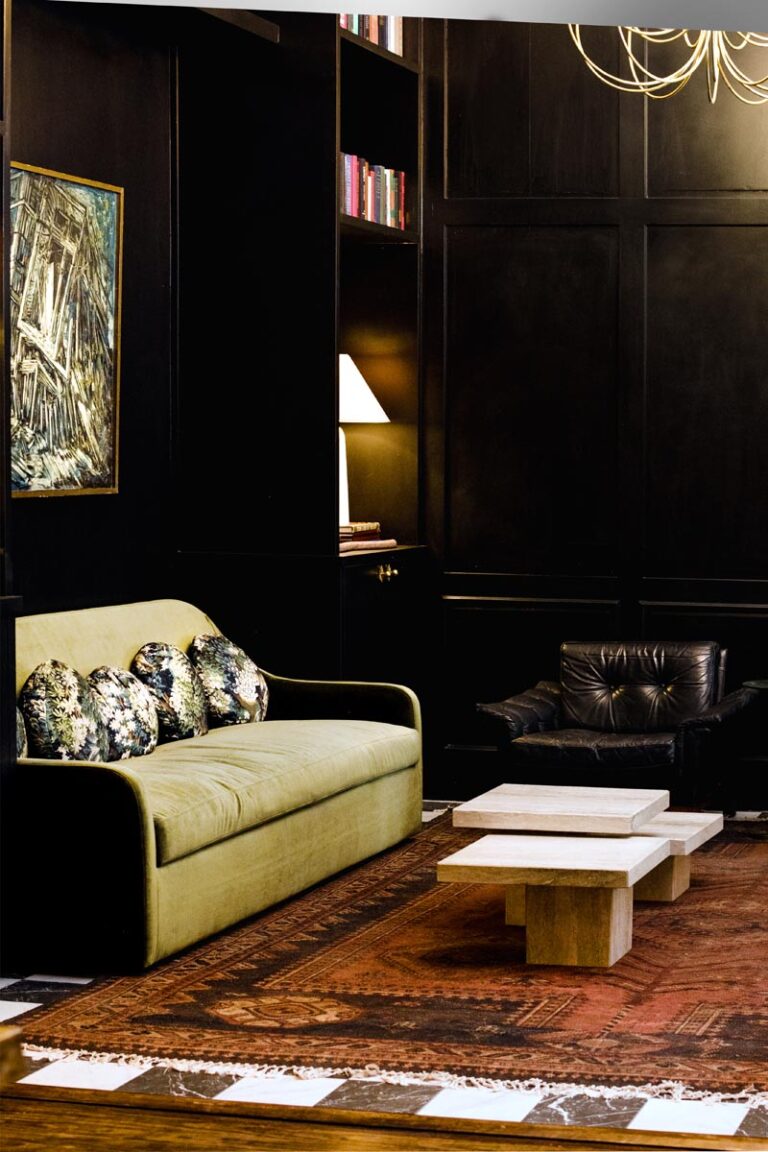
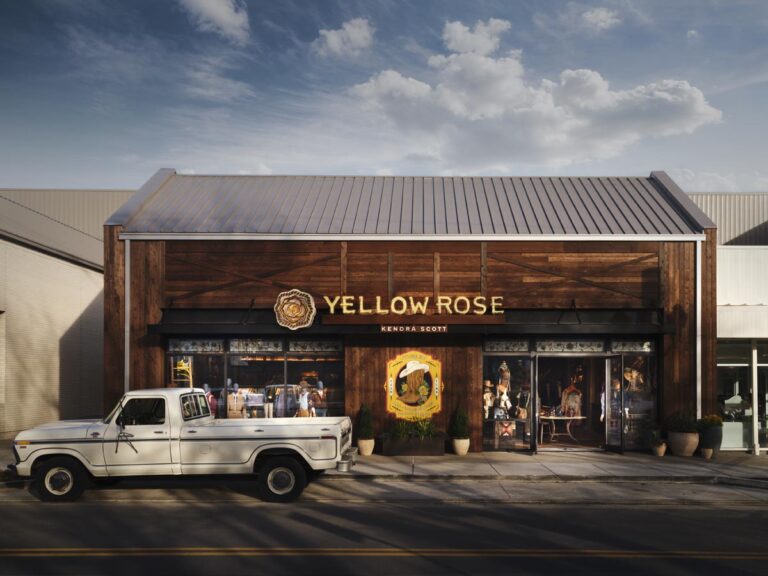
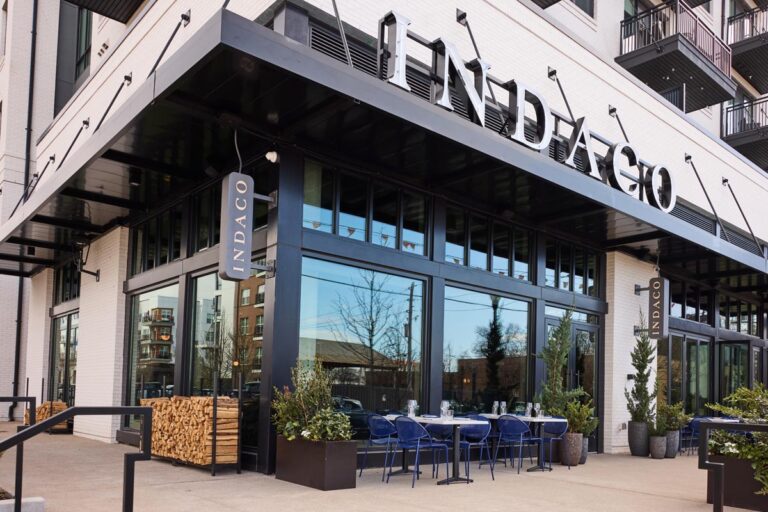
Catbird Seat in The Gulch; May Hosiery in Wedgewood-Houston, Locust in 12South, SoHo House in Wedgewood-Houston, Rocky Waters Inn in Gatlinburg; Drift Hotel in East Nashville