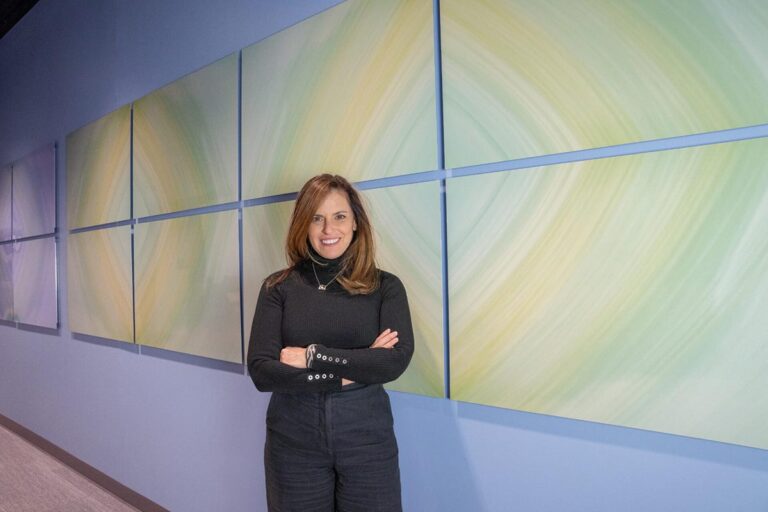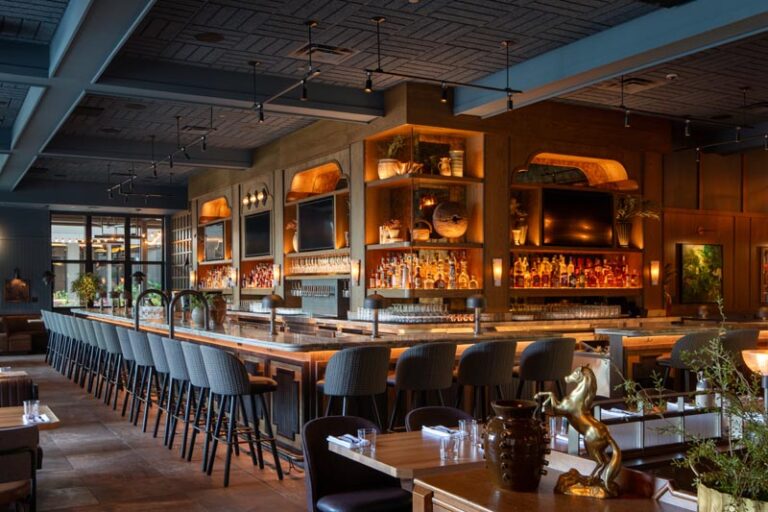
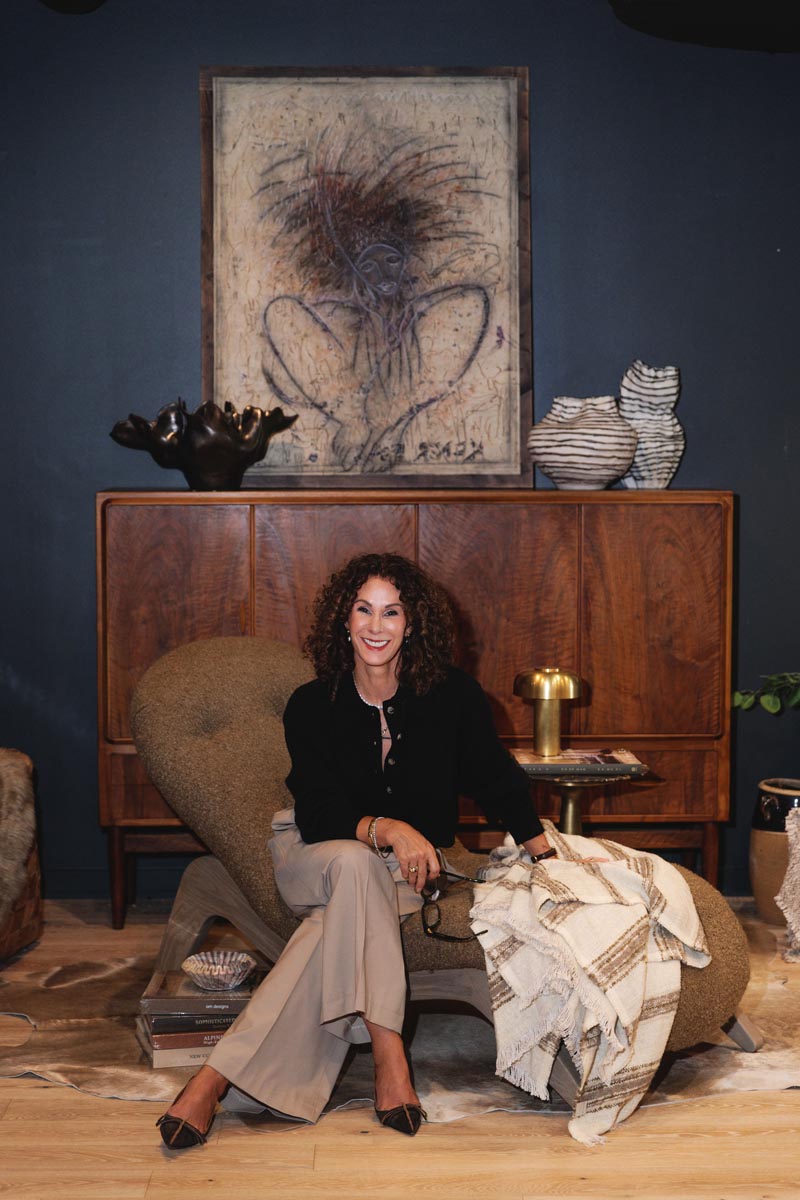
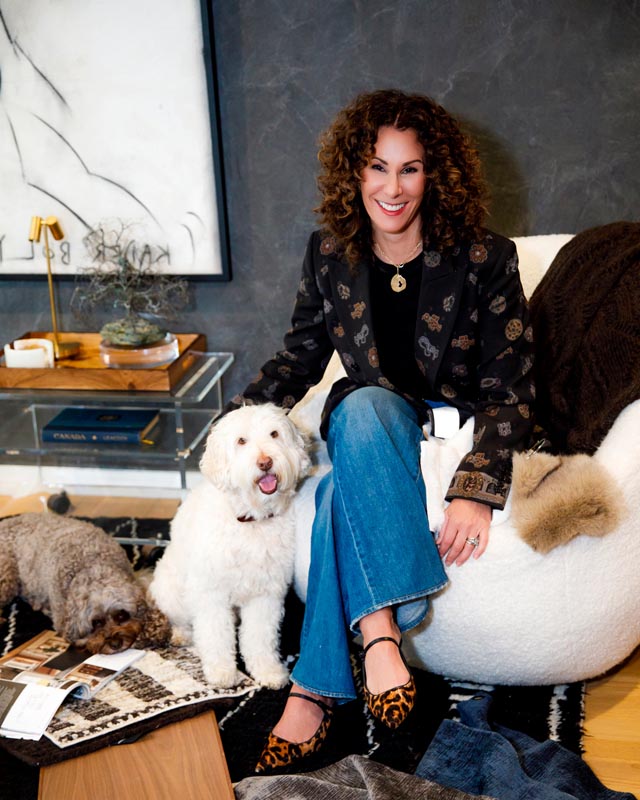
With Marie-Joe Bouffard, principal designer of JFY Designs, a conversation about interiors and the things we surround ourselves with can suddenly veer into excitement over a local artist, ideas for a jewelry pop-up in her showroom and, eventually, raising money for rescue animals.
It feels less like getting off topic and more like getting to the point.
Because for Bouffard, design has always been about more than what goes into a room. It’s about the people who make things, the people who live with them and the relationships built along the way.
“I don’t understand people who don’t want to share, who hold on to their sources or won’t divulge,” she says. “There’s enough for all of us. Let’s be generous. Let’s support each other.”
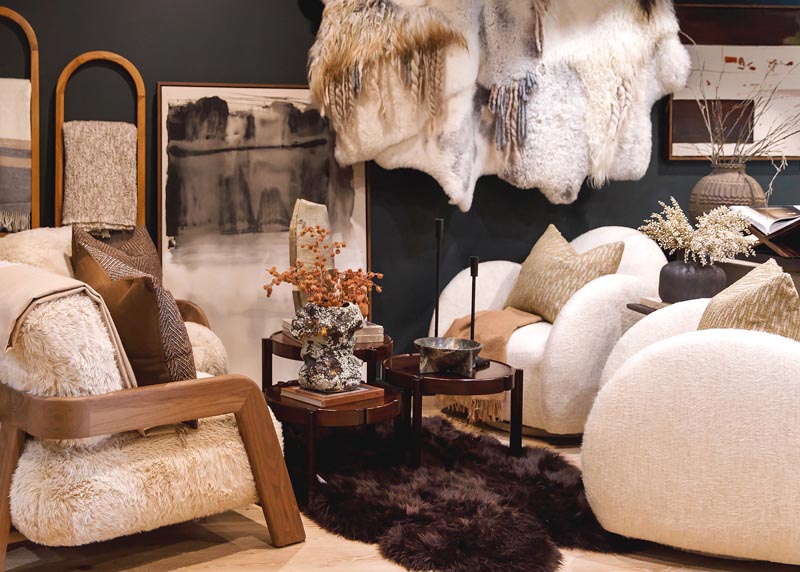
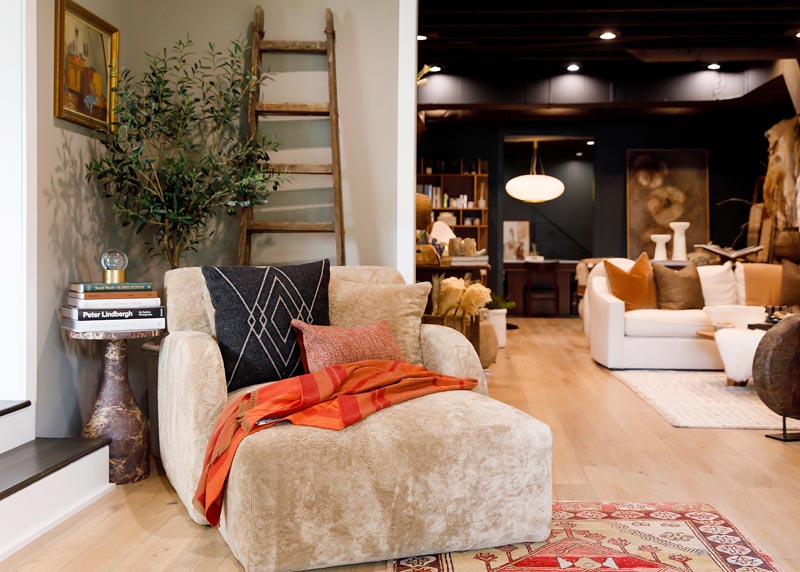
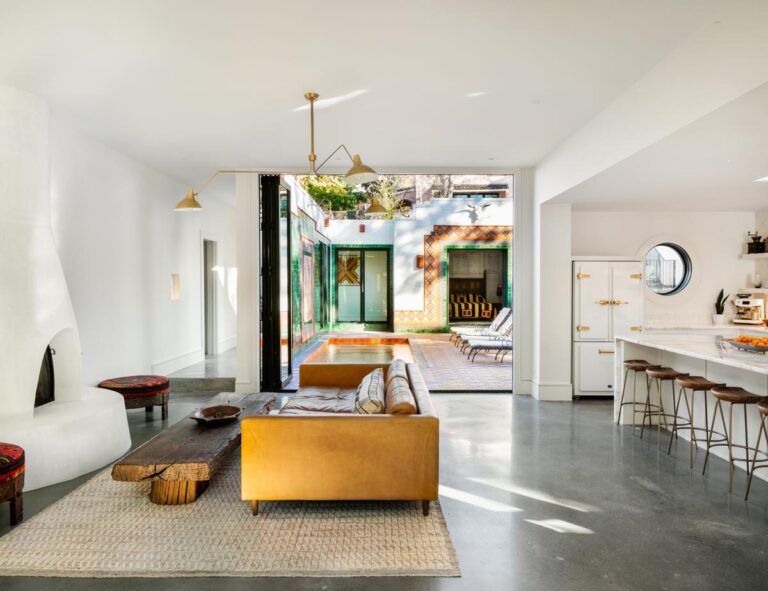
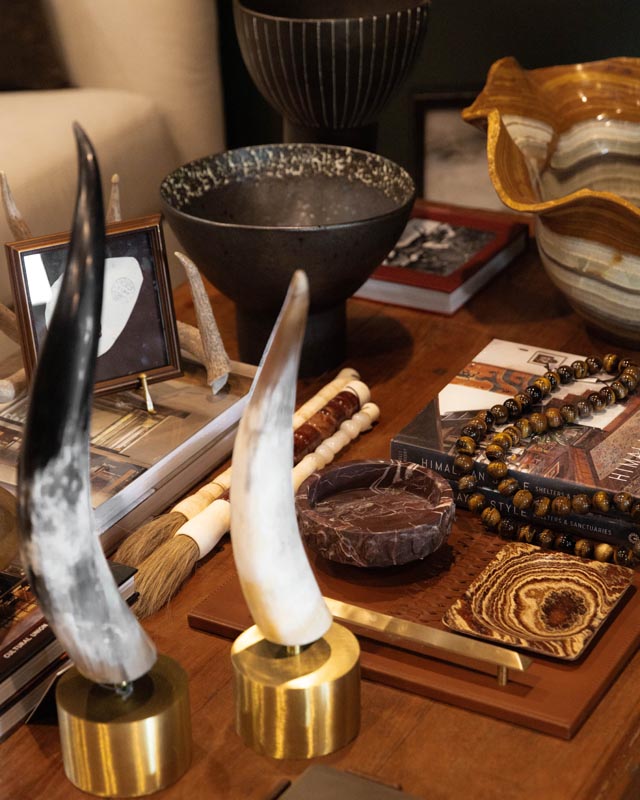
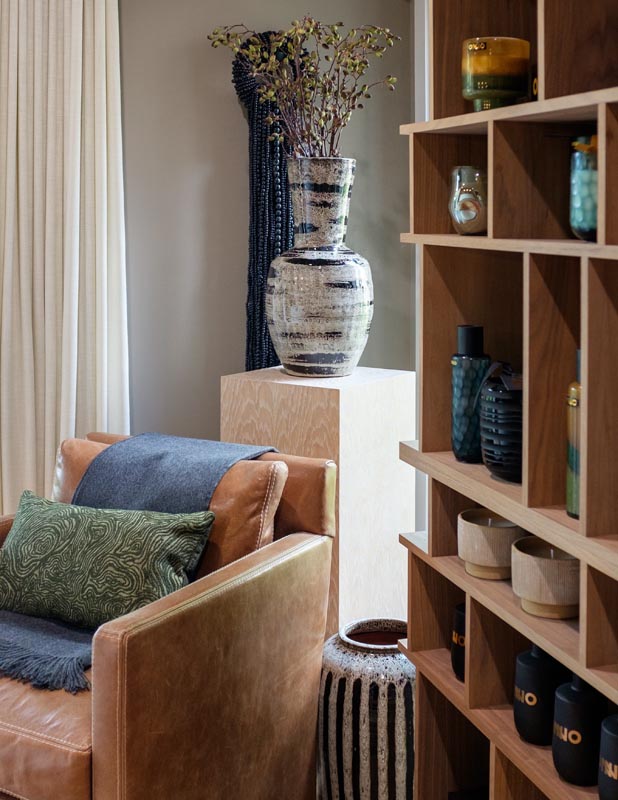
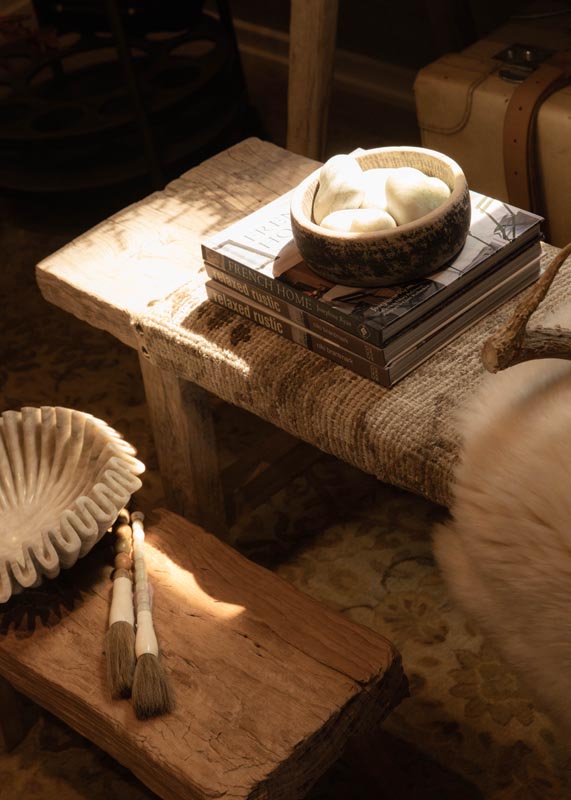
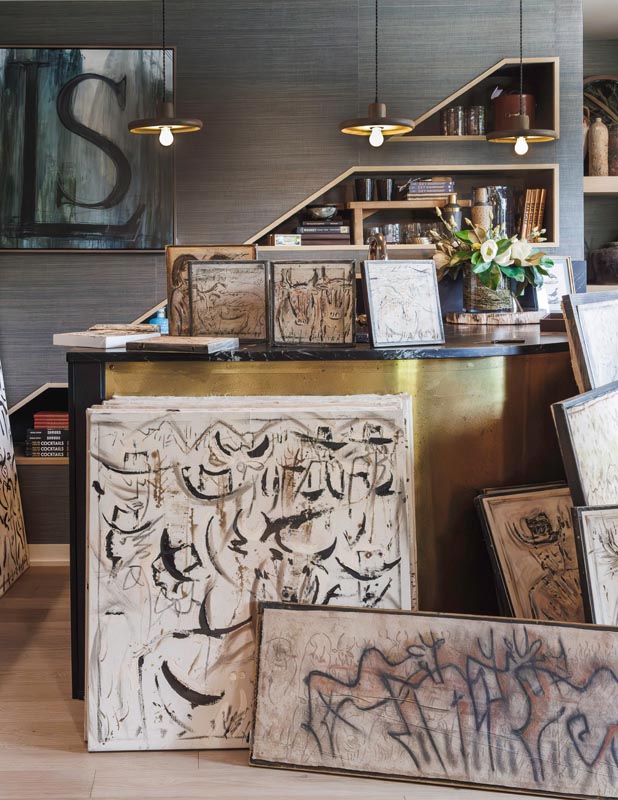
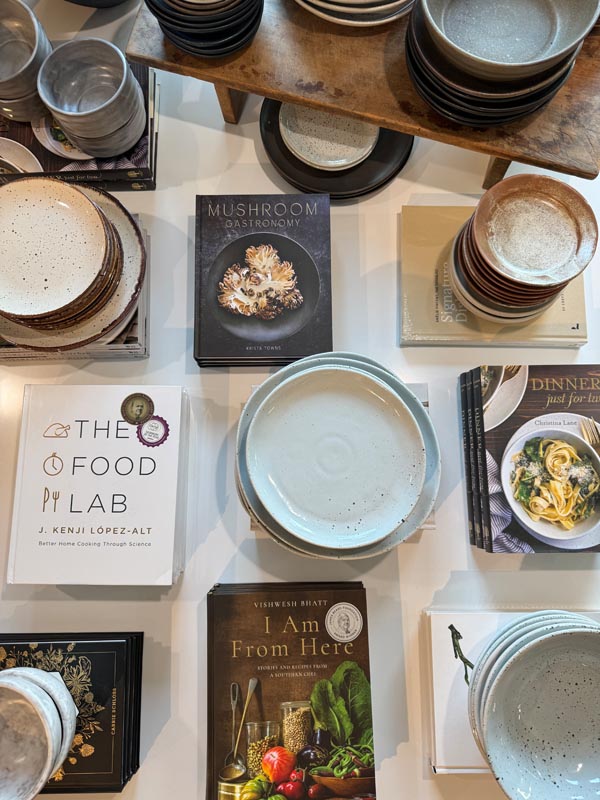
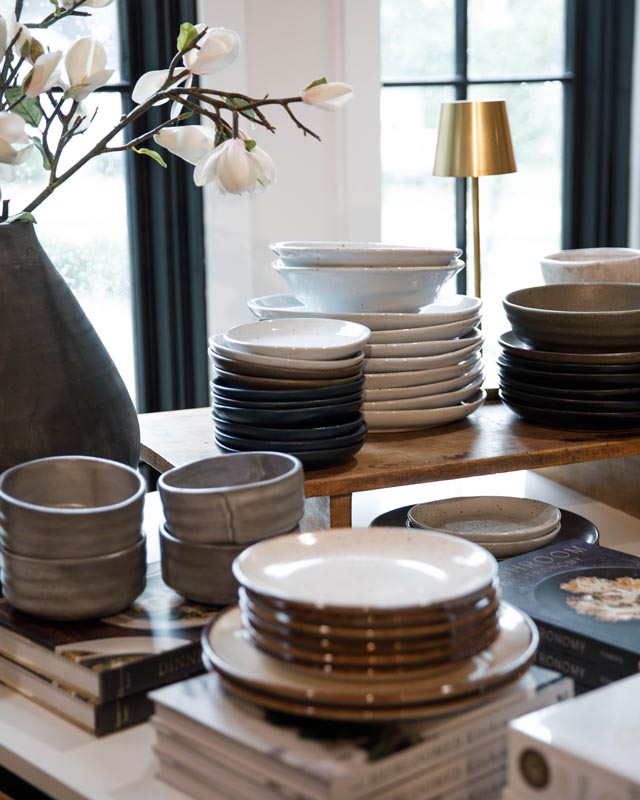
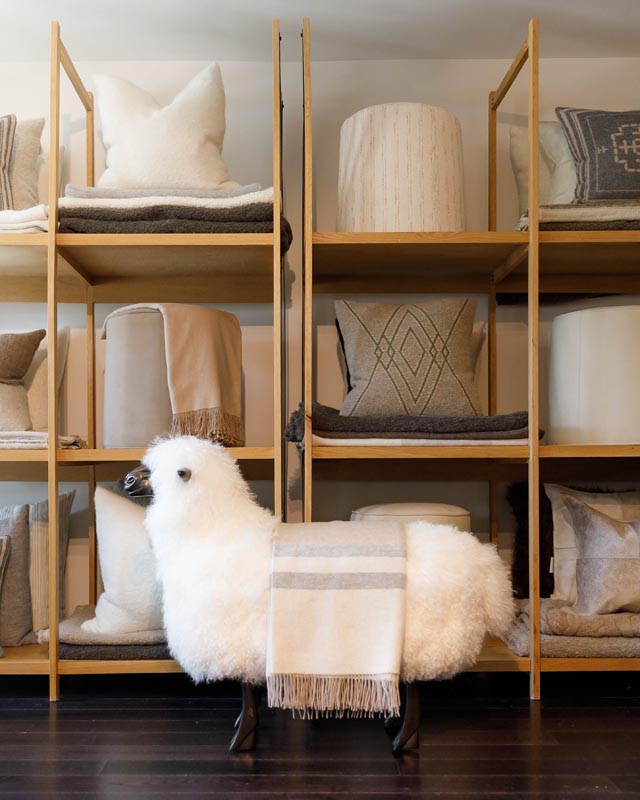
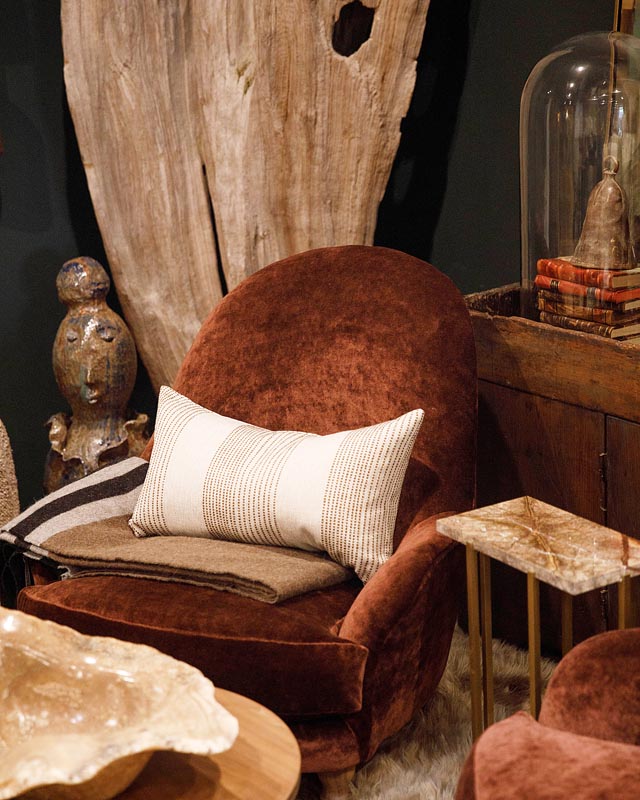
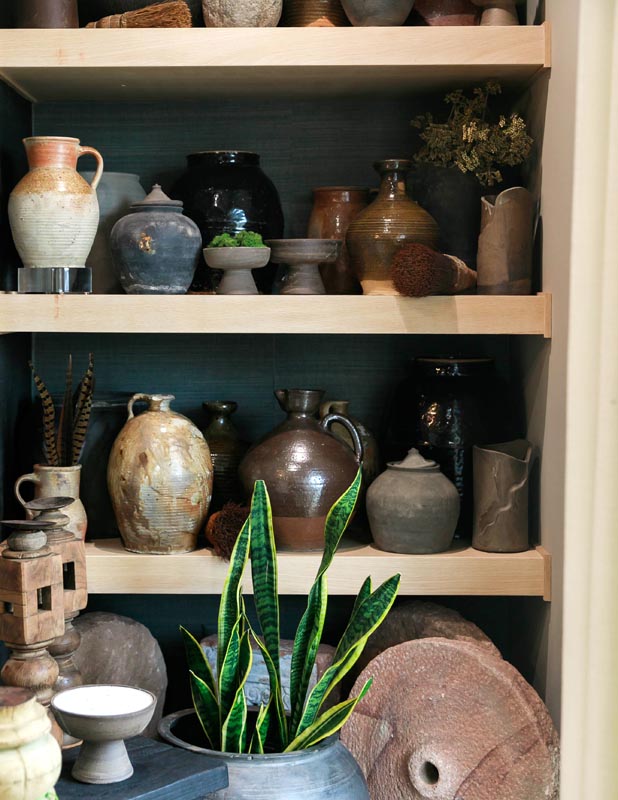
That generosity is evident at Le Studio, the unconventional design studio and retail space Bouffard has quietly created in Berry Hill. There is no single look that neatly defines it. Sculptural upholstered chairs sit alongside substantial pieces of aged wood. Contemporary art shares space with objects that bear the marks of time. Ceramics, books, textiles and smaller finds are gathered throughout rather than displayed like merchandise, creating the sense that everything has been collected rather than stocked.
It’s a sensibility Bouffard traces, at least in part, to where she began.
Born and raised in Quebec City, Bouffard grew up surrounded by a visual language that mixed centuries almost effortlessly: historic homes with old plank floors and exposed brick or stone, furnished with modern art and classic midcentury pieces.
“I really like to juxtapose modern with old,” she says. “I love including vintage, antiques.”
That appreciation extends beyond aesthetics. Bouffard shops vintage for herself when she can and incorporates the same approach into her design work.
“There’s so many treasures out there that already exist,” she says.
An Accidental Designer
Interior design, however, wasn’t the original plan.
Bouffard began her career in publishing in Montreal, eventually working her way up to chief editor. She loved the creativity of the work and the opportunity to lead a team, and expected it to remain her career.
Then her husband, Sylvain, was offered a position in Dallas shortly after their son Julian was born. The assignment was supposed to last two years, after which they would return to Canada, and Bouffard to publishing.
But two years became five, and with her publishing career on hold, Bouffard turned her creative attention to the family’s home in McKinney, Texas—a new construction house that, to someone raised among the character and history of Quebec City, felt nothing like home.
So she made it feel like one.
Neighbors noticed and began asking for help with their own houses. Friends followed, then builders, who brought her in to design model homes. A career she hadn’t planned began to take shape when her husband was offered a promotion and another “temporary” move to Nashville. More than two decades later, they’re still here.
Bouffard remembers Nashville’s design landscape then as dramatically different from the one designers work in today.
“This was a design desert,” she says. “You pretty much had to go to Atlanta for everything.”
And she did, driving to Atlanta for antiques and resources that simply weren’t available locally. Meanwhile, the same pattern that had unfolded in Texas began happening again: Bouffard worked on her own home, a neighbor saw it and asked for help, and one project led to another.
This time, though, she knew she had the beginnings of a business.
Making It Personal
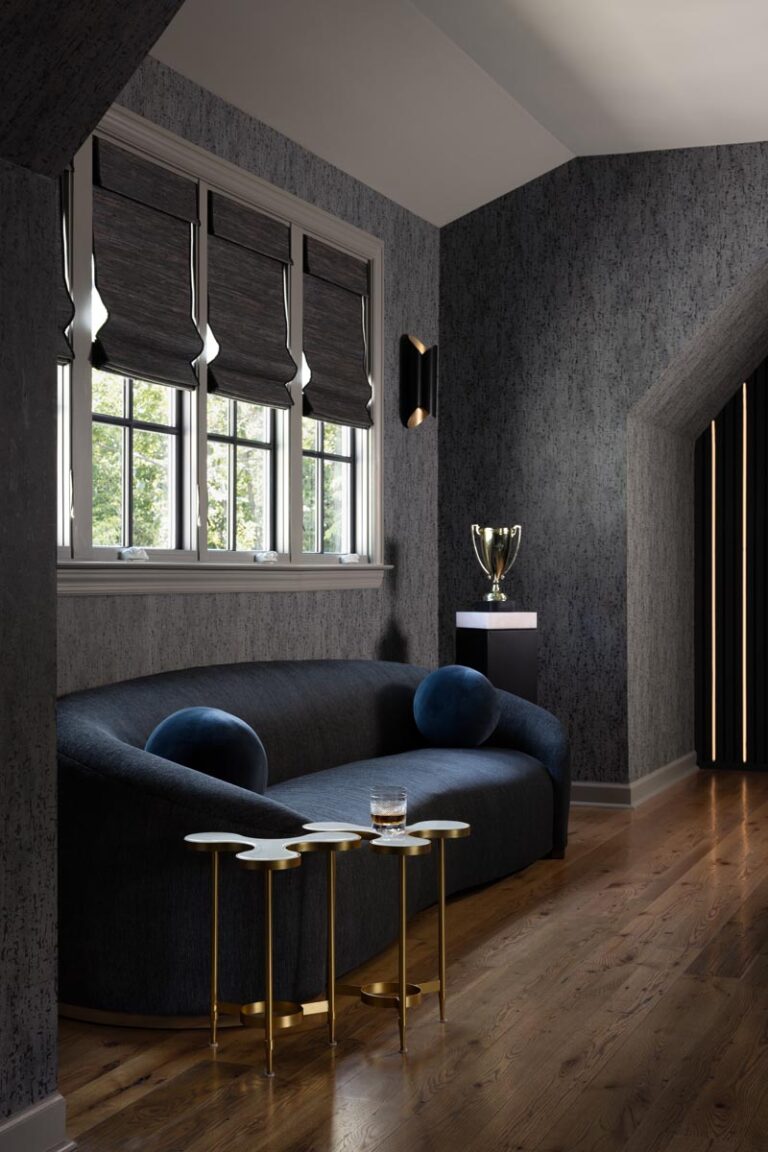
What grew from those early projects is a design practice that now reaches far beyond Nashville, with work that has taken Bouffard from Montana to Los Angeles and required her to build relationships with artists and galleries around the country.
Yet for all that growth, Bouffard’s work remains rooted in connection.
“Design is very personal,” she says. “It’s a huge privilege to be part of something so intimate.”
That intimacy goes far beyond selecting fabrics and wallpaper. Designers become privy to how families live, what they value, where they disagree and what they hope their homes will become.
Art is one place where Bouffard particularly enjoys guiding clients, especially those who may not yet know what speaks to them.
“Let me help you find young emerging artists,” she tells them. “It doesn’t mean that we have to spend a fortune, but can we try to do something that’s going to speak to you?”
Often, that first connection leads to another.
“Next thing you know, this person who didn’t care about art has beautiful art all over their walls,” she says. “And that makes me so happy.”
Her sourcing follows the project, with work in Montana, Los Angeles and New York expanding her relationships with galleries and artists along the way. Even a recent trip to Dallas for a speaking engagement included two extra days devoted to galleries—part of what Bouffard calls an ever-expanding “library” of art and resources.
And whenever possible, she would still prefer to begin close to home.
“I prioritize local artists, and artisans, always,” she says.
A Studio That Feels Like Home
That philosophy finds perhaps its clearest expression at Le Studio.
The space itself presented Bouffard with exactly the sort of design problem she enjoys. Ceilings were low. Acoustic panels covered much of the interior. Natural light reached the front but not the back.
Rather than disguise those conditions, she decided to exaggerate them.
“I’m a big believer in leaning into what a space gives you,” she says. “Some people will be like, ‘Well, it’s so dark, let’s paint it white.’ You know, there’s no natural light. It’s still gonna be dark. You’re fighting a lost battle.”
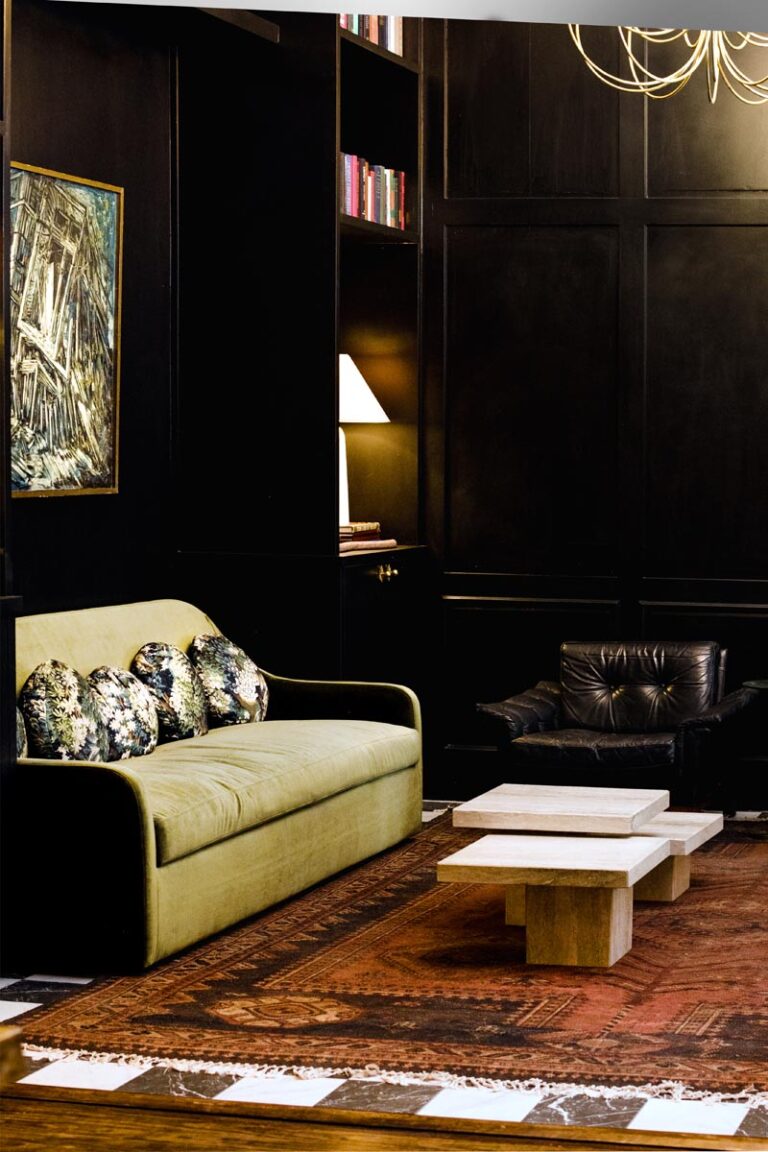
So the front became light and airy, taking advantage of its large windows, while the studio grows progressively darker and moodier toward the back, where exposed elements were painted black. Instead of forcing one aesthetic across the entire footprint, Bouffard allowed the architecture to dictate the experience.
The result unfolds almost like a home assembled over time. Soft, rounded seating meets worn wood and tactile textiles. Art is propped casually among furniture and objects. Pottery and dishes mingle with books and smaller treasures, creating a space that feels collected rather than merchandised.
And while everything may be shoppable, retail was never the only point. Hospitality was.
A small bar near the entrance was inspired by a New York shop where a coffee bar greeted visitors as they walked in. Bouffard imagined the same ritual at Le Studio: clients arriving for meetings and being offered a cappuccino or latte; friends gathering after hours over wine or cocktails.
“A lot of it was born from this idea that this is almost like a home and we’re entertaining people here,” she says.
That comes naturally to Bouffard, who talks just as enthusiastically about going to the market, planning what she will cook and choosing the wine she will serve with it as she does about selecting furniture or finding art.
“To me the studio is like that work version of that a little bit,” she says, “wanting people to feel at home.”
And the response from visitors suggests they do.
“A lot of people will tell me, ‘My God, I just want to stay here. Can I sit in that chair and work from here?’” Bouffard says. “And that’s the biggest compliment to me.”
It may also be the simplest way to understand both Le Studio and the woman who created it. Neither is particularly interested in impressing you from a distance.
They would rather invite you in.
Le Studio
2826 Dogwood Place
OPEN Mon-FRI, 10am-5PM
615-730-6915